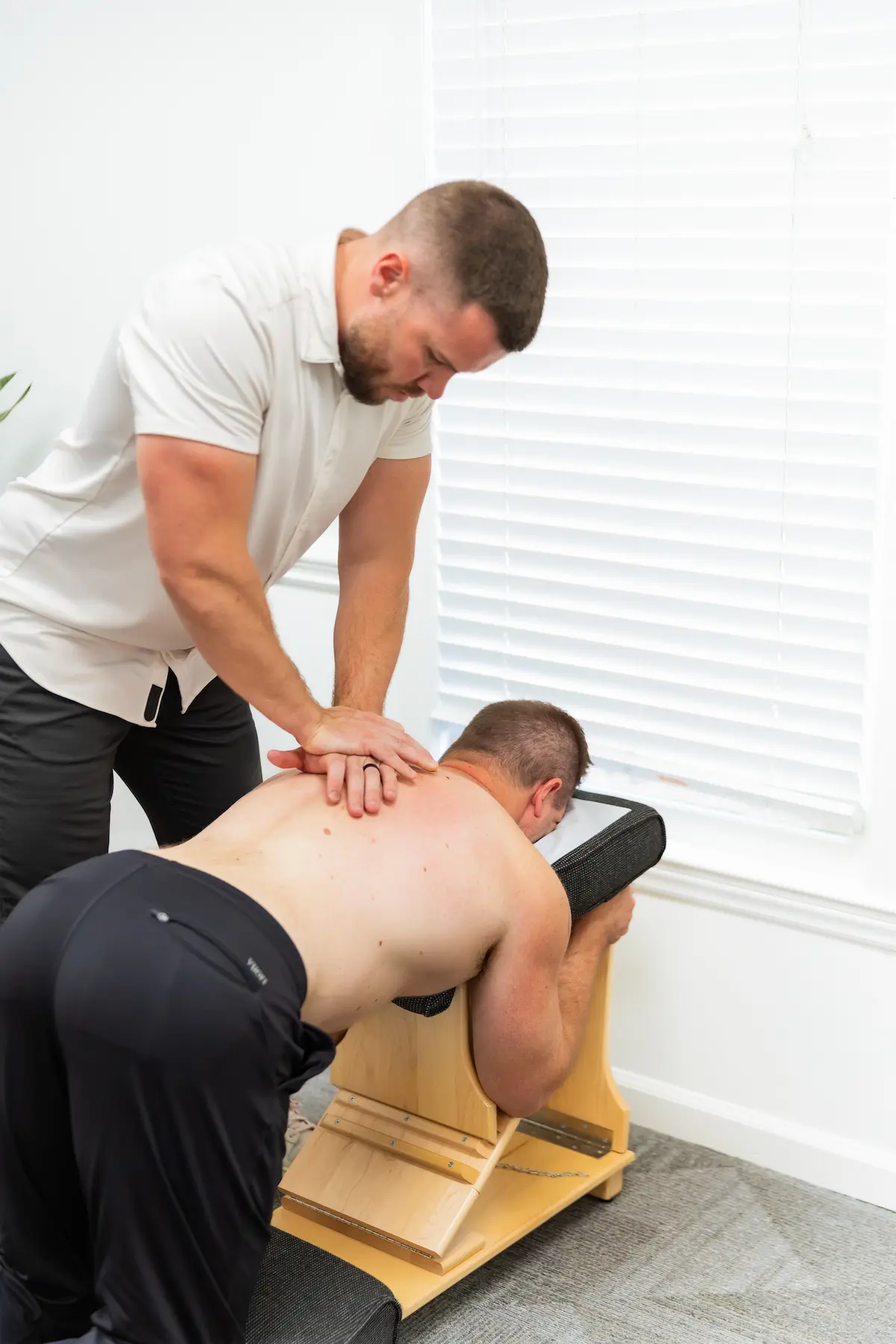
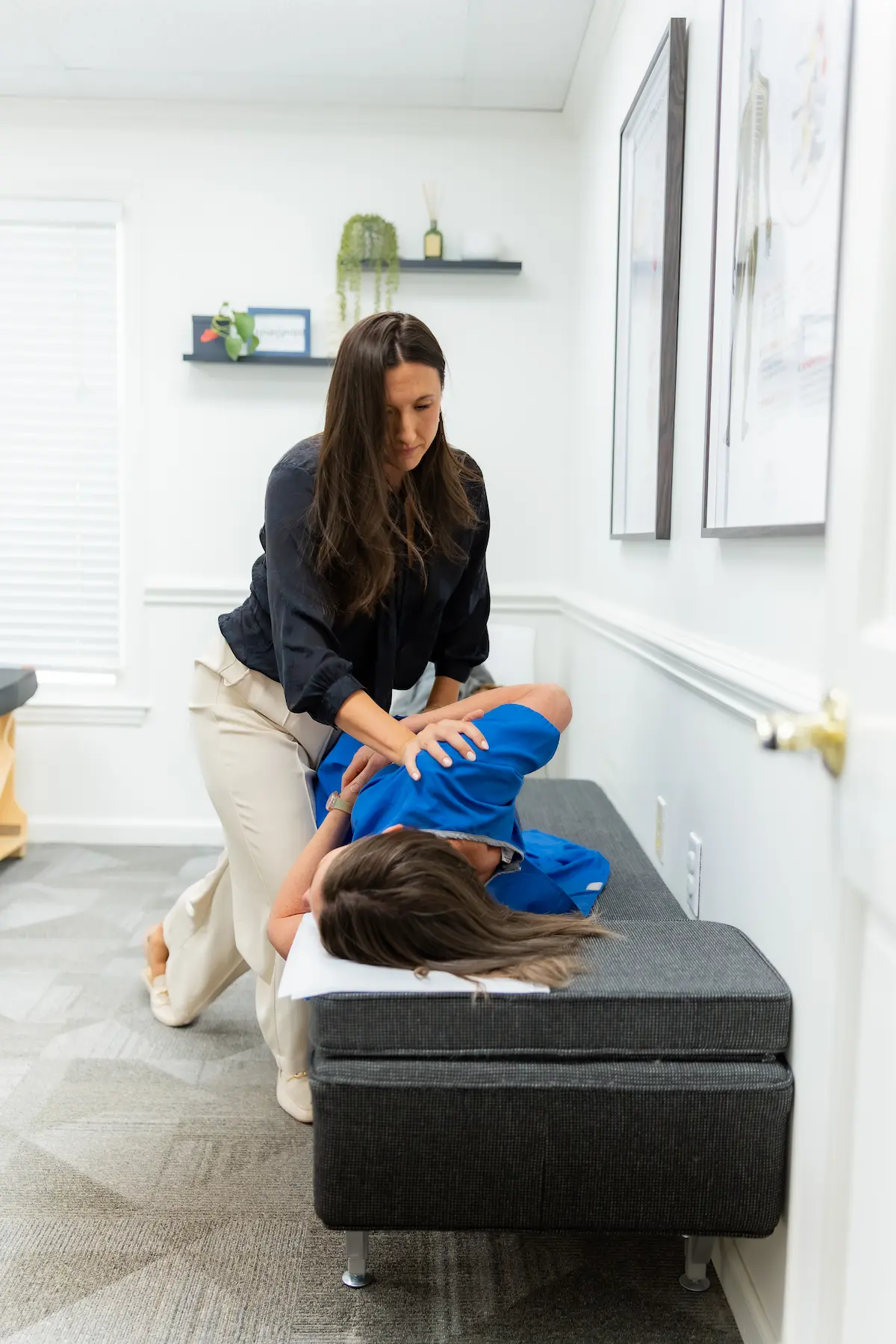
Quick Answer: A sports chiropractor evaluates how your spine, pelvis, and joints are working under the demands of your sport, then uses specific adjustments to restore motion and support healthy nerve function. At Axiom Chiropractic in Southpark, Charlotte, we use Gonstead analysis, including full-spine X-rays, to help athletes recover from injuries like low back strains and shoulder impingement, move more freely, and stay consistent with training.
Chiropractic care for athletes is not just about recovering from injuries. It is about keeping the nervous system and musculoskeletal system performing at the level your training demands.
At Axiom Chiropractic in Southpark, we work with athletes across a wide range of sports and training levels, from weekend runners to competitive lifters. The pattern we see again and again is consistent: when the spine moves well and the nervous system functions without interference, many athletes move better, recover more comfortably, and handle training load more reliably.
Why the Spine Is Central to Athletic Performance
Every movement an athlete makes is coordinated by the nervous system, and the spinal cord runs through and is protected by the spine. Nerve signals travel from the brain to the muscles, and feedback signals return from the muscles and joints to the brain. The speed and accuracy of that communication influence reaction time, coordination, force production, and injury resilience.
When vertebral misalignments create interference along that pathway, signaling may become less efficient. Muscle activation patterns can become less precise. The change may be subtle enough that the athlete does not consciously notice it, yet still enough to matter under competitive conditions.
This is why many professional and elite athletes use chiropractic care not only for injury treatment but also as a regular maintenance practice. For athletes, small improvements in how the body moves and recovers can add up over a season or a career.
What Does a Sports Chiropractor Treat?
Athletes come to our Southpark office for a mix of acute injuries and nagging problems that keep coming back. Common reasons include:
- Low back pain and stiffness from lifting, rotation sports, or long runs. See our back pain page.
- Disc irritation and radiating leg pain, including sciatica and disc injuries common in heavy lifters.
- Neck pain and stiffness after contact, falls, or cycling posture. Learn more on our neck pain page.
- Shoulder, hip, and knee pain from overuse, impingement, or uneven mechanics.
- Sports-related headaches, especially in contact athletes.
- Pinched nerves vs. tight muscles. If you are not sure which one you are dealing with, our post on pinched nerves and muscle knots explains the difference.
The Performance Benefits Southpark Athletes Report
Athletes who maintain consistent chiropractic care alongside their training often report improvements that go beyond pain relief. Results vary from person to person, but these are the changes we hear about most:
Better range of motion. Joint mobility depends on how well the spinal segments that supply those joints are moving and functioning. When cervical and thoracic misalignments are corrected, shoulder mobility often improves. When lumbar and pelvic alignment is restored, hip flexibility and stride length may change. Some athletes are surprised to find that mobility gains they credited to stretching also tracked with spinal correction.
Faster recovery between sessions. Recovery from training depends heavily on the nervous system. The parasympathetic nervous system supports tissue repair, inflammation resolution, and metabolic restoration after exercise. A spine under chronic stress may help keep the sympathetic “fight-or-flight” system activated, which can work against recovery. Our post on the sympathetic vs. parasympathetic nervous systems explains this balance. Many athletes under chiropractic care tell us they feel less sore the day after training and ready to perform again sooner.
Reduced injury frequency. This is the outcome that matters most over a full season. Misaligned spinal segments can alter the way force is transmitted through the body, creating compensatory movement patterns that place abnormal load on joints and soft tissues. Correcting those misalignments may help normalize force transmission and reduce the wear patterns that lead to overuse injuries.
Improved proprioception and coordination. Proprioception, the body’s sense of its own position in space, relies on nerve signals from joint receptors throughout the spine and extremities. Spinal misalignments may disrupt those signals. Athletes who restore spinal alignment often describe feeling more precise in their movements, more balanced under load, and more connected to what their body is doing in space.
Injury Recovery: Where Gonstead Specificity Matters Most
When athletes do get injured, the speed and completeness of recovery often depend on whether the underlying structural contributors are identified and addressed, not just the tissue that hurts.
A hamstring strain that keeps re-tearing may have a lumbar or sacral misalignment contributing to chronic tension in that muscle group. A shoulder that keeps impinging despite physical therapy may involve a cervical or upper thoracic misalignment affecting the nerve supply to the rotator cuff muscles. A knee that will not fully settle may have a pelvic alignment issue altering how force travels through the leg.
The Gonstead assessment we use at Axiom is built to find these structural contributors, not just to treat where it hurts. Full-spine weight-bearing X-rays show how the entire structure is loaded. Nervoscope instrumentation helps identify nerve irritation at specific spinal levels that correlate with the athlete’s injury pattern. Specific adjustments then address those levels precisely, without the rotational forces that can aggravate recently injured tissue.
This is the difference between care aimed at lasting recovery and care that provides temporary relief while the underlying driver persists. For competitive athletes whose training timelines matter, getting to the actual cause can shorten time away from the sport.
Our extremity pain page covers how spinal misalignment contributes to shoulder, knee, and hip injuries in more detail. These are the most common sites for athletic overuse and acute injury. For a closer look at that connection, read our post on shoulder, knee, and hip pain that starts in the spine.
Working Alongside Your Trainer, Coach, or Physical Therapist
Sports chiropractic works best as part of a team. Physical therapists and athletic trainers focus on strength, mobility drills, and return-to-play progressions. Our focus is on spinal and pelvic alignment and how it affects the nervous system. Many of our athletes do both, and we are glad to coordinate with your trainer, coach, or therapist so everyone is working toward the same goal.
When to See a Medical Doctor First
Some sports injuries need medical evaluation before chiropractic care. Get checked by a physician or urgent care right away if you have:
- A suspected fracture, obvious deformity, or inability to bear weight
- A joint that gives way, locks, or swells quickly after injury
- Headache, confusion, dizziness, nausea, or memory problems after a hit to the head
- Numbness, tingling, or weakness in the arms or legs after a neck or back injury
- Loss of bladder or bowel control, or numbness in the groin area
Red Light Therapy for Athletic Recovery
For Southpark athletes looking to support recovery, combining Gonstead chiropractic with red light therapy offers a non-pharmacological option that many find helpful.
Our medical-grade panels use the 660nm and 850nm wavelengths studied in photobiomodulation research. Research suggests these wavelengths may help reduce markers of muscle damage and inflammation, support muscle repair, and support mitochondrial function in fatigued cells. In practice, many athletes report less delayed-onset muscle soreness and quicker turnaround between hard training sessions.
Some athletes use red light therapy before competition or hard training to prepare muscles and delay fatigue. Others use it primarily after training for recovery, and many use both approaches. Research on pre- and post-exercise photobiomodulation in athletes is promising and growing. Our red light therapy service page has more detail on the specific mechanisms and evidence base.
Sport-Specific Considerations
Runners and Cyclists
Repetitive single-plane movement in running and cycling creates predictable spinal and pelvic stress patterns. Lumbar and sacroiliac misalignments are very common in both sports, and they can contribute to the hip, knee, and IT band problems that sideline so many Southpark runners and cyclists. Pelvic alignment assessment and correction is often the missing piece for athletes who have tried every soft tissue treatment without lasting resolution.
Overhead Athletes: Tennis, Baseball, Swimming
Athletes who repeatedly load the shoulder in overhead positions place significant demands on the cervical and upper thoracic spine. The rotator cuff muscles receive their nerve supply primarily from the C5 and C6 levels, which are often affected by the cervical loading patterns overhead athletes develop. In these athletes, cervical correction may help improve shoulder strength and stability when shoulder-specific training and local treatment alone have not been enough.
Contact Sports: Football, Soccer, Wrestling, Rugby
Contact athletes sustain repeated cervical and thoracic impacts that can accumulate as misalignment over a season. Proactive assessment and correction throughout a competitive season, not just when symptoms become acute, helps keep the spine from developing cumulative dysfunction that can contribute to performance decline and injury risk as the season goes on.
Weightlifters and CrossFit Athletes
Heavy axial loading in squats, deadlifts, and Olympic lifts places large compressive demands on spinal segments that need to be properly aligned to distribute that load safely. Lumbar and thoracic misalignments in heavy lifters can alter how load transfers through the spine, increasing disc stress and facet joint loading at specific levels. Regular chiropractic assessment for strength athletes can be part of an injury prevention strategy, not just a recovery tool.
Youth and High School Athletes
Young athletes are still growing, which makes good mechanics and early attention to recurring pain especially important. We use gentle, age-appropriate techniques for kids and teens, explained in our post on chiropractic safety for kids. Parents of contact-sport athletes should also read our guide to concussions in youth sports.
What to Expect at Your First Visit
Your first visit starts with a conversation about your sport, training schedule, injury history, and goals. From there, the exam includes posture and movement assessment, palpation, Nervoscope readings, and full-spine weight-bearing X-rays when appropriate. Many new patients also receive an INSiGHT nervous system scan.
We review the findings with you before any adjustment, so you understand what we found and how it relates to your sport. Our post on your first Gonstead chiropractic appointment walks through each step.
Maintenance Care During a Season
The best chiropractic strategy for active athletes is not to wait for pain and then seek care. It is to maintain structural alignment throughout a competitive season, so the nervous system and musculoskeletal system stay at a high level and minor misalignments are caught before they develop into injuries.
Many competitive athletes do well with visits every two to four weeks during their active season, and more often during periods of high training load or after significant physical stress. The goal of these visits is not to correct major dysfunction. It is to maintain the structural baseline established during the initial care plan and to catch new misalignments before they become symptomatic.
Many of the Southpark athletes who train at our practice describe their regular chiropractic visits as a non-negotiable part of their training plan, in the same category as sleep and nutrition, not an optional extra when something hurts.
Frequently Asked Questions
When during training should I schedule chiropractic visits?
There is no single right answer, but most athletes find visits work best either the day after a hard training session (as part of the recovery process) or on a lighter training day. Visits the day before competition are generally fine, and most athletes feel better, not worse, after an adjustment. We will discuss timing relative to your specific training schedule at your initial consultation.
Can chiropractic help with sports-related headaches?
It may, and this is a significant concern for contact sport athletes. Cervical misalignments from repeated impacts are a common contributor to post-exertional headaches in contact athletes. Our existing content on headaches and migraines covers the cervical mechanism in detail.
For athletes with a concussion history, cervical spine assessment is especially important, since some persistent post-concussion symptoms have a neck-related component. Any new head injury should be evaluated by a medical provider first.
Do I need a referral to see a sports chiropractor in Charlotte?
No referral is needed to see a chiropractor in North Carolina. If you plan to use insurance, check your plan’s rules, or call our office and we can help you understand your options.
Is it safe to get adjusted with a sports injury?
In most cases, yes, once serious injuries like fractures, torn ligaments, or concussion have been ruled out. We adapt the technique to the injury and avoid putting force into recently injured tissue. If your exam suggests something outside our scope, we will refer you to the right provider.
Do professional athletes really use chiropractic care?
Yes, across many major professional sports. According to the Foundation for Chiropractic Progress, all 32 NFL teams use doctors of chiropractic, and chiropractors have served on the U.S. Olympic sports medicine team since the 1980 Winter Games. Our Southpark patients who are serious recreational, collegiate, and competitive athletes have access to the same kind of specific, data-driven chiropractic care.
If you’re an athlete in Southpark and your performance or recovery isn’t where it should be, your spine deserves a closer look. Call (704) 469-4772 or schedule a consultation at Axiom Chiropractic and let’s find out what a well-aligned nervous system can do for your training.
Axiom Chiropractic & Wellness Center serves Charlotte, NC and surrounding communities with expert Gonstead chiropractic care, advanced red light therapy, functional medicine, and specialized animal chiropractic. Led by Dr. Tyler Hartley and Dr. Megan Hullihen, we help families overcome back pain, neck pain, headaches, sciatica, and digestive issues through precise spinal corrections. Call (704) 469-4772 or schedule online to start your wellness journey today.
Axiom Chiropractic & Wellness Center serves Charlotte, NC and surrounding communities with expert Gonstead chiropractic care, advanced red light therapy, functional medicine, and specialized animal chiropractic. Led by Dr. Tyler Hartley and Dr. Megan Hullihen, we help families overcome back pain, neck pain, headaches, sciatica, and digestive issues through precise spinal corrections. Call (704) 469-4772 or schedule online to start your wellness journey today.