Yes, stress really can cause physical back pain, and the connection is far more direct than most people realize. Stress isn’t just in your head. It produces real, measurable changes in your muscles, your nervous system, and your body’s inflammation levels that translate into genuine physical pain. At Axiom Chiropractic in Southpark, we regularly see patients whose persistent back pain has a significant stress component, and understanding that link is often the key to finally addressing pain that hasn’t responded to other approaches.
How Stress Becomes Physical Pain
When you experience stress, your body activates its fight-or-flight response through the sympathetic nervous system. This response evolved to help you deal with immediate physical threats, and it produces a cascade of physical changes throughout your body. The problem is that modern stress is often chronic, work pressure, financial worry, emotional strain, and the body wasn’t designed to stay in this activated state for extended periods.
Several specific mechanisms turn that chronic stress into physical back pain.
Muscle Tension
One of the most immediate effects of stress is muscle tension. When you’re stressed, your muscles tighten and brace, particularly in the neck, shoulders, and back. This is an automatic protective response. Under chronic stress, those muscles never fully relax. They stay in a constant state of partial contraction, hour after hour, day after day.
Sustained muscle tension is genuinely painful. The muscles fatigue, develop knots, restrict movement, and ache. Chronically tense muscles in the back also pull on the spine, which can contribute to misalignment and joint restriction. This is why so many people carry their stress in their upper back and neck, and why stressful periods often coincide with flare-ups of back and neck pain.
Nervous System Overactivation
Chronic stress keeps the sympathetic nervous system, the activating, alerting branch, in a state of overdrive. This sustained activation increases overall muscle tone, heightens pain sensitivity, and keeps the body from shifting into the parasympathetic state where rest, recovery, and tissue repair happen.
When the nervous system is stuck in this activated state, you actually feel pain more intensely. Stress lowers your pain threshold, meaning the same physical issue hurts more when you’re stressed than when you’re calm. This is a well-documented effect, not imagination. A back problem that might be a minor ache in a relaxed state can become significant pain when the nervous system is amplified by chronic stress.
Inflammation
Chronic stress raises levels of inflammatory markers in the body through sustained cortisol dysregulation. Elevated systemic inflammation makes existing joint and tissue irritation worse and slows healing. So stress doesn’t just create new tension, it amplifies any existing back problem by adding an inflammatory load on top of it.
The Stress-Pain Cycle
What makes this especially difficult is that stress and pain feed each other in a cycle. Stress causes physical back pain. The back pain itself then becomes a source of stress, you’re uncomfortable, worried about it, frustrated that it’s not improving, and limited in what you can do. That added stress increases muscle tension and nervous system activation further, which worsens the pain, which creates more stress.
People can get stuck in this loop for a long time. Breaking it usually requires addressing both sides, the physical pain and the underlying nervous system state driving and amplifying it. Treating only one while ignoring the other often produces incomplete results.
Why Stress-Related Back Pain Is Often Missed
Stress-related back pain is frequently overlooked or misunderstood for a few reasons. People expect back pain to come from a specific injury or mechanical event, so when there’s no obvious cause, they’re confused about why it hurts. The pain is real and physical, so the idea that stress is contributing can feel dismissive, as though someone is saying it’s all in your head, which isn’t the case at all.
The truth is that stress-related back pain involves genuine physical changes, real muscle tension, real nervous system overactivation, real inflammation. It’s not imaginary. But because there’s no single mechanical injury to point to, it often gets inadequately addressed, with the stress component never being recognized as part of the picture.
How We Address It at Axiom
When a Southpark patient comes in with back pain that has a stress component, our approach addresses both the physical and the nervous system sides.
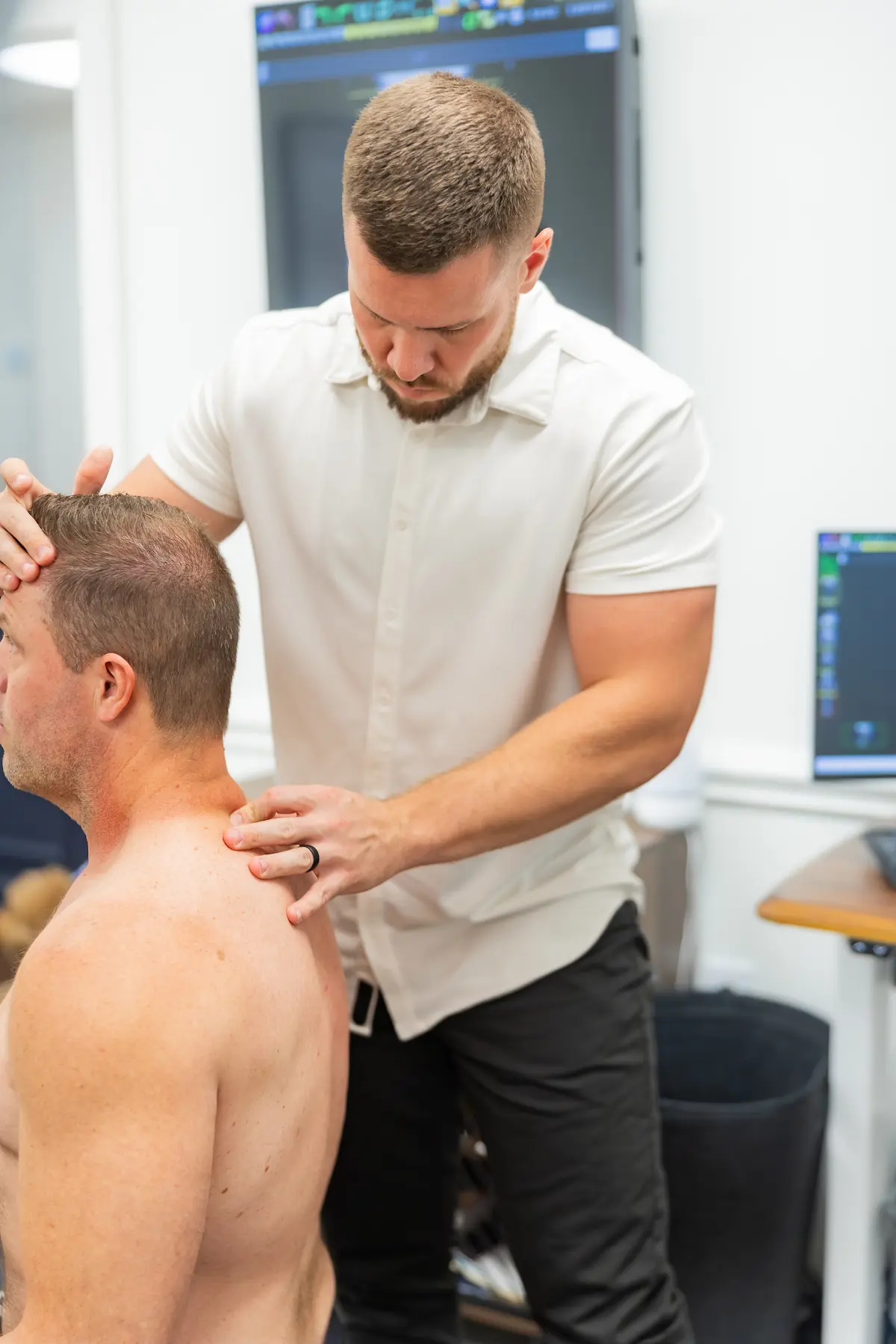
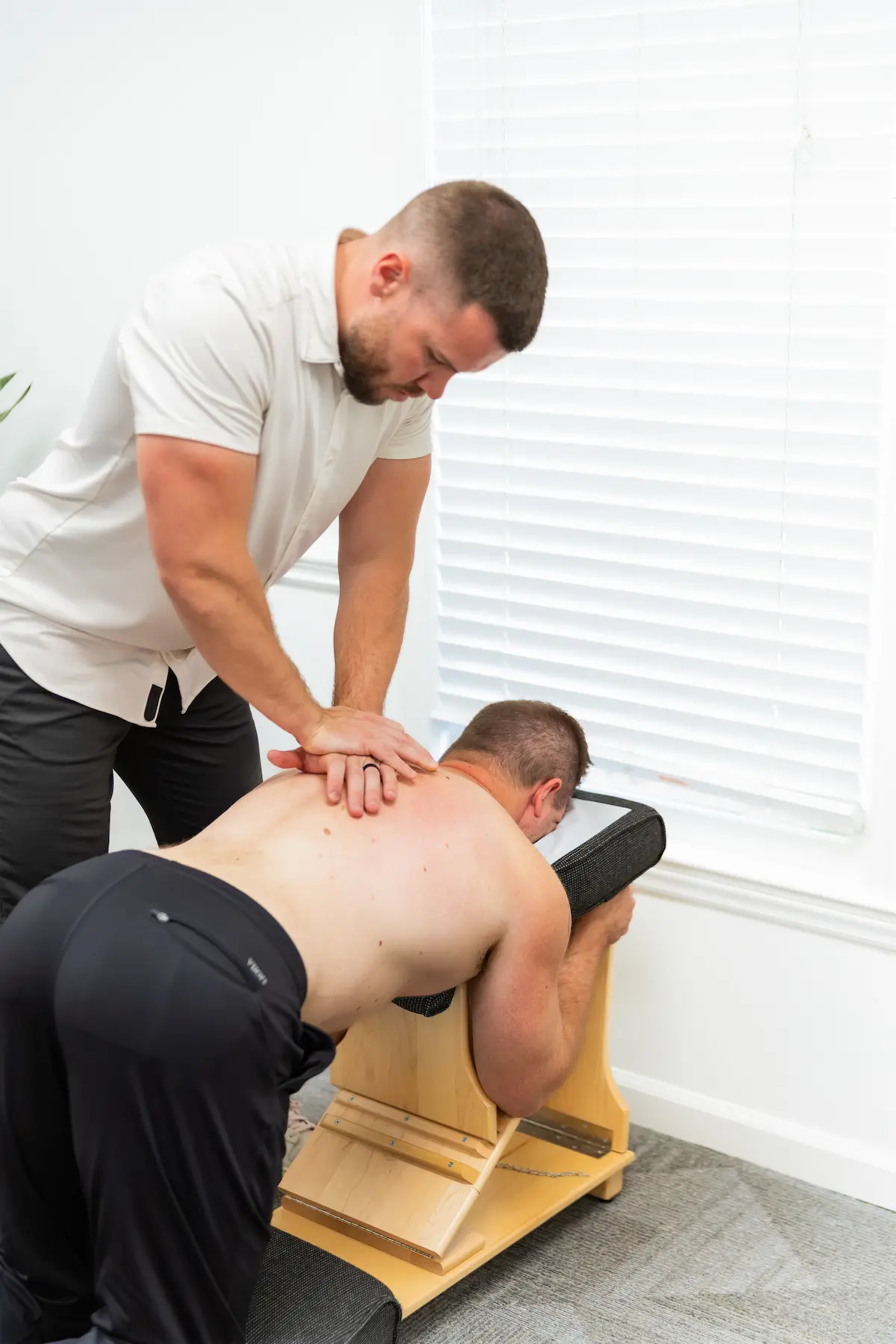
On the physical side, full-spine weight-bearing X-rays and Nervoscope instrumentation identify where the spine is misaligned and where nerve irritation and the associated muscle tension are concentrated. Specific Gonstead chiropractic adjustments correct the misalignments and restore proper joint motion, which relieves the muscle tension and reduces the physical pain.
But there’s an important nervous system benefit as well. Chiropractic adjustments help shift the nervous system out of sympathetic overdrive toward parasympathetic balance. By reducing the mechanical stress and nerve irritation in the spine, adjustments lower the overall load on the sympathetic nervous system, which can help calm the very overactivation that’s amplifying the pain. Many patients describe feeling not just less physical pain but also a sense of being calmer and less tense after care.
This nervous system connection is central to how chiropractic helps with stress-related pain. Our post on chiropractic care for anxiety and stress goes deeper on the nervous system side, and the foundational concept is explained in our existing content on the sympathetic and parasympathetic nervous systems. For the physical contributors specifically, our back pain page covers the mechanisms in detail.
Supporting Your Nervous System Between Visits
Chiropractic care addresses an important piece, but managing the stress side at home reinforces the results. A few approaches that genuinely help:
Deep breathing. Slow, deep breathing that fully expands your abdomen activates the parasympathetic nervous system and directly counteracts the stress response. Even a few minutes of slow breathing can shift your nervous system toward calm and reduce muscle tension. It’s one of the simplest and most effective self-regulation tools available.
Regular movement. Physical activity reduces stress hormones and releases tension held in the muscles. Even a daily walk helps discharge the physical effects of stress and supports a calmer nervous system baseline.
Consistent sleep. Sleep is when the nervous system recovers. Poor sleep keeps you in a more stress-activated state, which worsens both stress and pain. Prioritizing good sleep supports the whole system.
Addressing the stress source where possible. Sometimes the most effective thing is to address what’s actually driving the chronic stress, whether through changes in your situation, support from others, or professional help when appropriate.
Frequently Asked Questions
If my back pain is from stress, does that mean it’s not a real physical problem?
It’s absolutely a real physical problem. Stress produces genuine physical changes, muscle tension, nervous system overactivation, and inflammation, that cause real pain. Stress-related back pain isn’t imaginary or “all in your head.” The pain is physical, the cause just includes a stress component alongside any mechanical factors.
Can chiropractic help if my pain is mostly stress-related?
Yes. Chiropractic care addresses both the physical muscle tension and spinal restriction that stress creates, and it helps shift the nervous system out of the overactivated state that amplifies pain. Many patients with stress-related back pain find significant relief because care addresses both sides of the problem rather than just one.
Will I need to fix my stress before my back pain improves?
Not necessarily in that order. Addressing the physical pain and calming the nervous system through care often provides relief even while you’re still working on the stress sources in your life. That said, managing stress alongside care produces the best and most lasting results, since it addresses what’s driving the cycle.
If you’ve been dealing with back pain that flares with stress or has no clear mechanical cause, the stress connection may be a bigger part of the picture than you realized. Call (704) 469-4772 or schedule a consultation at Axiom Chiropractic in Southpark and let’s address both the pain and what’s driving it.
Axiom Chiropractic & Wellness Center serves Charlotte, NC and surrounding communities with expert Gonstead chiropractic care, advanced red light therapy, functional medicine, and specialized animal chiropractic. Led by Dr. Tyler Hartley and Dr. Megan Hullihen, we help families overcome back pain, neck pain, headaches, sciatica, and digestive issues through precise spinal corrections. Call (704) 469-4772 or schedule online to start your wellness journey today.