Quick Answer: The sympathetic nervous system controls your “fight-or-flight” response. It raises your heart rate, speeds up breathing, and sharpens alertness when you face stress or danger. The parasympathetic nervous system controls “rest-and-digest.” It slows the heart, supports digestion, and helps your body recover. Both are branches of the autonomic nervous system, and good health depends on your body shifting smoothly between the two.
Understanding how your body works is one of the most empowering things you can do for your health. No matter how much you already know, there is always more to learn.
In this post, we explore sympathetic vs. parasympathetic: the two divisions of the autonomic nervous system that shape how your body reacts, recovers, and functions every day. For proper body function, these two systems need to stay balanced. When they become imbalanced, dysfunction can develop in the body, and symptoms often follow.
Knowing which system is active in a given situation helps explain why your body responds the way it does, both physically and emotionally. With that awareness, you can take steps to help rebalance the sympathetic and parasympathetic systems yourself, or recognize when it is time to seek the right professional help. For a wider look at how your nerves run the body, read our post on why nervous system function matters.
What is the autonomic nervous system and what are its two divisions?
The autonomic nervous system, also known as the involuntary nervous system, is a division of the peripheral nervous system. It controls and regulates the functions of your internal organs and glands, such as the heart and digestive system.
It is responsible for involuntary actions that happen without conscious thought. These include heart rate, breathing rate, blood pressure, digestion, sweating, bladder control, and pupil size.
The autonomic nervous system has two main divisions: the sympathetic nervous system and the parasympathetic nervous system. A third branch, the enteric nervous system, manages the digestive tract directly and works closely with both.
What is the sympathetic nervous system?
The sympathetic nervous system is responsible for the body’s “fight-or-flight” response. It can be seen as the body’s primary source of energy during times of distress. It is activated when we perceive danger, stress, or even excitement.
During this response, organ output increases (such as higher blood pressure), organs speed up (such as a faster heart rate), muscles contract more readily, and certain hormones are released to prepare the body for action. The main hormones involved are adrenaline (epinephrine) and noradrenaline (norepinephrine).
Other changes happen within seconds. Pupils dilate, airways open, breathing quickens, blood flow shifts toward the working muscles, stored sugar is released for fuel, and digestion slows down.
Here is a familiar example. A car cuts you off on I-77 and you slam on the brakes. Your heart pounds, your hands grip the wheel, and your breathing speeds up before you have time to think. That is your sympathetic nervous system at work.
Sympathetic nerves leave the spinal cord from the thoracic and upper lumbar spine, roughly from T1 to L2. They connect to a chain of nerve clusters, called ganglia, that runs alongside the spine.
What is the parasympathetic nervous system?
The parasympathetic nervous system is responsible for controlling basic bodily functions such as digestion, sexual arousal, and rest and relaxation. It is often called the “rest-and-digest” system. It works behind the scenes to keep the body in a calm, balanced state and to maintain homeostasis, the stable internal environment that supports good health.
When it is active, organ output decreases (blood pressure can fall), organs slow down (such as a slower heart rate), muscle tension eases, and the body shifts toward energy conservation. It also increases saliva and digestive activity, constricts the pupils, and supports repair and recovery.
The main parasympathetic nerve is the vagus nerve. It travels from the brainstem, down through the neck, to the heart, lungs, and digestive organs. Other parasympathetic fibers exit the lower spine at the sacral level (S2 to S4) to supply the bladder, bowel, and reproductive organs. Its main chemical messenger is acetylcholine.
The heavy, relaxed feeling after a good meal, or the way your heart rate settles after a workout, are everyday signs of parasympathetic activity.
Sympathetic vs Parasympathetic: Key Differences at a Glance
| Feature | Sympathetic Nervous System | Parasympathetic Nervous System |
|---|---|---|
| Nickname | Fight-or-flight | Rest-and-digest |
| Main job | Prepares the body for action and stress | Calms the body and supports recovery |
| Heart rate | Speeds up | Slows down |
| Blood pressure | Rises | Lowers, mainly by slowing the heart |
| Breathing and airways | Faster breathing, airways open | Slower breathing, airways return to resting size |
| Pupils | Dilate | Constrict |
| Digestion | Slows down | Speeds up |
| Saliva | Decreases (dry mouth) | Increases |
| Bladder | Holds urine | Allows urination |
| Energy | Releases stored energy | Conserves and stores energy |
| Where the nerves exit | Thoracic and upper lumbar spine (T1 to L2) | Brainstem (including the vagus nerve) and sacrum (S2 to S4) |
| Main chemical messengers | Norepinephrine and epinephrine | Acetylcholine |
| Speed of response | Fast and widespread | Slower and more targeted |
How do sympathetic and parasympathetic systems work together to maintain balance in the body?
The sympathetic and parasympathetic systems work together in a type of counterbalance to keep the body functioning properly. A simple way to picture it: the sympathetic system is the gas pedal, and the parasympathetic system is the brake.
Both systems are active at some level all the time. As one becomes more active, the influence of the other generally decreases. This system of checks and balances is known as autonomic balance, and it helps maintain a steady state within the body.
Your heart is a good example. At rest, the vagus nerve keeps your heart beating slower than it would on its own. When you climb stairs or feel stressed, sympathetic input rises and parasympathetic input eases, so your heart rate climbs. Once the demand passes, the balance shifts back.
In times of stress, the sympathetic system provides energy and focus. At rest, the parasympathetic system helps us relax and restore. When both systems are in balance and can shift easily, our bodies stay healthy and efficient.
It is important to remember that although these two branches can have opposing effects, both are essential for proper functioning. A healthy balance of sympathetic and parasympathetic activity is necessary for good health and wellbeing. By understanding their roles, we can learn to influence them and support a more balanced state of mind and body.
One objective way to measure this balance is heart rate variability (HRV), the natural variation in time between heartbeats. A flexible, well-regulated nervous system tends to show higher HRV. At Axiom Chiropractic, every new patient exam includes an INSiGHT nervous system scan with an HRV reading, which shows how well your body shifts between these two states.
What happens when the sympathetic vs parasympathetic systems become imbalanced?
When the sympathetic and parasympathetic systems become imbalanced, it can lead to a variety of physical and emotional symptoms. Common signs of an autonomic imbalance may include fatigue, anxiety, headaches, a racing heart rate, digestive problems, insomnia, and difficulty concentrating.
Put simply, when the systems are out of balance, you are likely to notice some type of symptom or body dysfunction. The pattern often depends on which side is dominating.
If the sympathetic system is working harder (as in times of stress), or the parasympathetic system is inhibited, symptoms tend to reflect organs working in overdrive. Examples include high blood pressure, anxiety, and insomnia.
If the parasympathetic system is working harder, or the sympathetic system is inhibited, the opposite can happen. Symptoms tend to reflect organs slowing down, such as fatigue, low energy, a slow heart rate, low blood pressure, or lightheadedness when standing.
For most people today, the more common pattern is a sympathetic system that stays “switched on” because of ongoing stress, poor sleep, long workdays, and constant screen time. This is sometimes called sympathetic dominance.
Signs your body may be stuck in fight-or-flight
- Trouble falling or staying asleep, or waking up tired. Learn more about the nervous system connection to sleep.
- Feeling wired, anxious, or on edge most of the day. Our post on anxiety, stress, and the nervous system explains why.
- Bloating, irregular bowel habits, or an upset stomach during stressful periods, since digestion slows when the sympathetic side dominates. See how the nerves connect to digestion.
- Frequent tension headaches, tight neck and shoulders, or jaw clenching.
- Shallow, fast breathing or a resting heart rate that feels higher than usual.
- Blood pressure readings that creep up during stressful seasons. Read about the nervous system and blood pressure connection.
With a proper understanding of how the autonomic nervous system works, we can learn to recognize and manage imbalances as they arise. By supporting healthy sympathetic and parasympathetic responses, we can maintain balance between both systems and enjoy a calmer, healthier lifestyle.
If these symptoms persist for long periods of time or are particularly severe, it is important to seek professional help to determine whether an autonomic imbalance or another condition is the cause.
If you are experiencing significant stress or anxiety, relaxation techniques such as yoga, meditation, and deep breathing exercises can be helpful. These activities may help relax the body and restore balance between the sympathetic and parasympathetic systems. By understanding the role of the autonomic nervous system and how to maintain a balanced state, we can support good health and wellbeing for years to come.
When to seek medical care right away
Some symptoms that look like nervous system stress can signal a more serious problem. Call 911 or seek emergency care if you experience:
- Chest pain, pressure, or tightness, especially if it spreads to the arm, jaw, or back
- Fainting, or a very fast or very slow heartbeat with dizziness or shortness of breath
- A sudden, severe headache unlike any you have had before
- New weakness, numbness, facial drooping, or trouble speaking
For ongoing anxiety, panic attacks, or low mood that interferes with daily life, talk with your primary care provider or a licensed mental health professional.
How can you support your autonomic nervous system using lifestyle changes and natural remedies?
To maintain a healthy balance between the sympathetic and parasympathetic systems, positive lifestyle changes are important. These may include finding ways to reduce stress, such as meditation or mindfulness practices, getting plenty of restful sleep each night, eating a balanced diet, and exercising regularly.
If you live a fast-paced, active lifestyle, these stress reducers are essential. Vagus nerve stimulation exercises may be beneficial as well. We cover several of them in our follow-up post on the best ways to balance your nervous system.
In addition to lifestyle changes, several natural remedies may help support the autonomic nervous system, such as herbal teas, essential oils, and dietary supplements. Supplements are not one size fits all, so it is wise to review them with a qualified provider first. Our post on choosing the right supplements for your body explains how to approach this.
These systems are interconnected and work together to keep the body functioning properly. By understanding how they maintain balance and by making positive lifestyle changes, we can create a healthier, more balanced state of mind and body. With some effort, we can all learn to foster this balance and enjoy a healthier life.
Simple ways to activate your parasympathetic nervous system
- Slow breathing with a longer exhale. Breathe in through your nose for about 4 seconds and out for about 6 to 8 seconds. Repeat for 3 to 5 minutes. A longer exhale is one of the quickest ways to encourage a rest-and-digest state.
- Humming, singing, or gargling. The vagus nerve connects to muscles in the throat, so these simple habits may gently stimulate it.
- Gentle movement. Walking, yoga, and stretching can help the body shift out of fight-or-flight, especially after a stressful day.
- Consistent sleep. Keep regular bed and wake times and limit screens in the hour before bed.
- Time outdoors. Morning daylight and time in nature may support a calmer baseline.
- Mind your stimulants. Too much caffeine, especially later in the day, keeps the sympathetic side active longer.
- Social connection. Laughing and spending time with people you trust can help the body feel safe enough to relax.
Where chiropractic care fits in
The spine and the autonomic nervous system share close quarters. Sympathetic nerves exit along the mid and upper lower back, and parasympathetic pathways pass through the upper neck and the sacrum. Because of this, structural problems in the spine can place stress on the nerves that pass through those areas. We explain this in more detail in our post on what a spinal subluxation is.
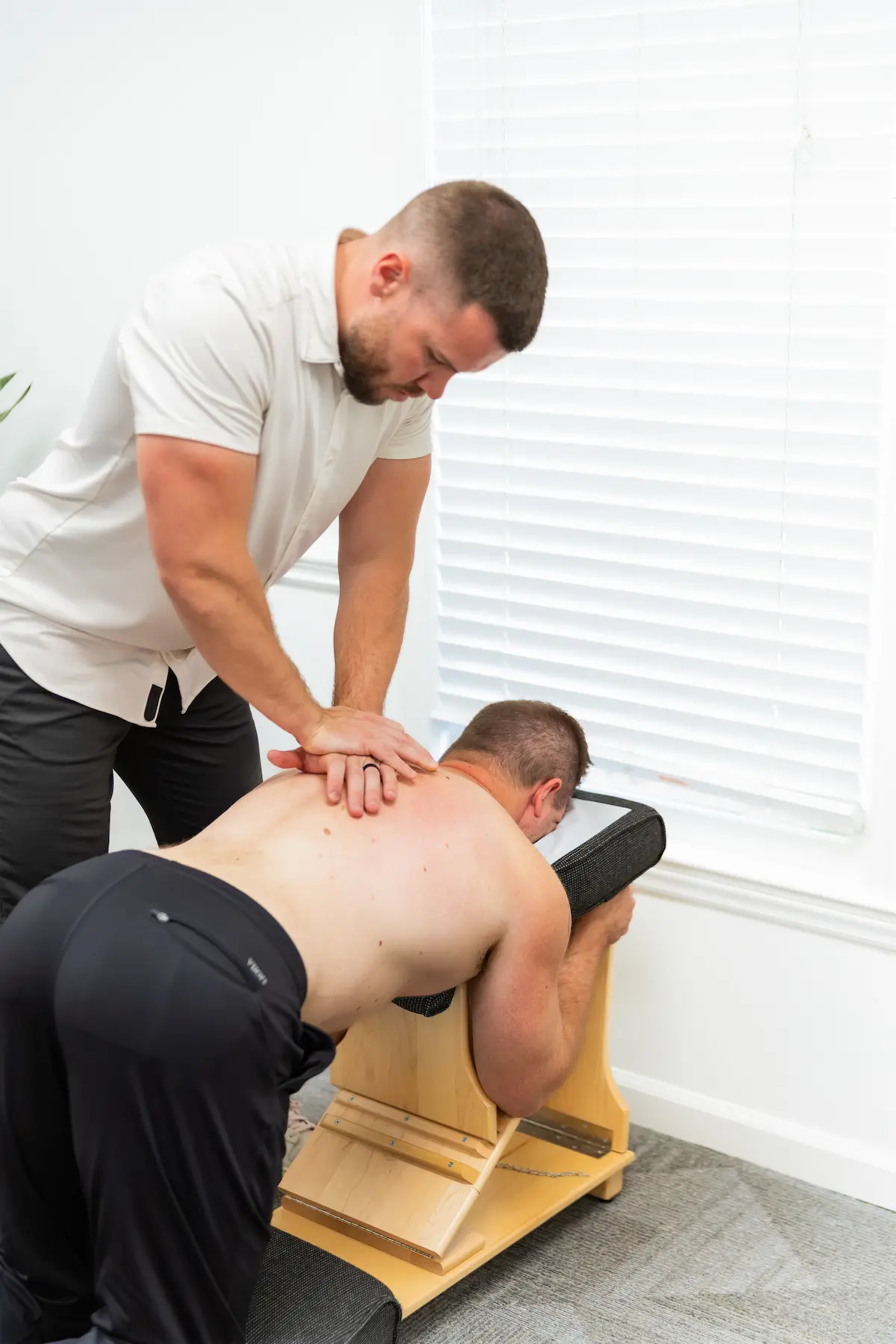
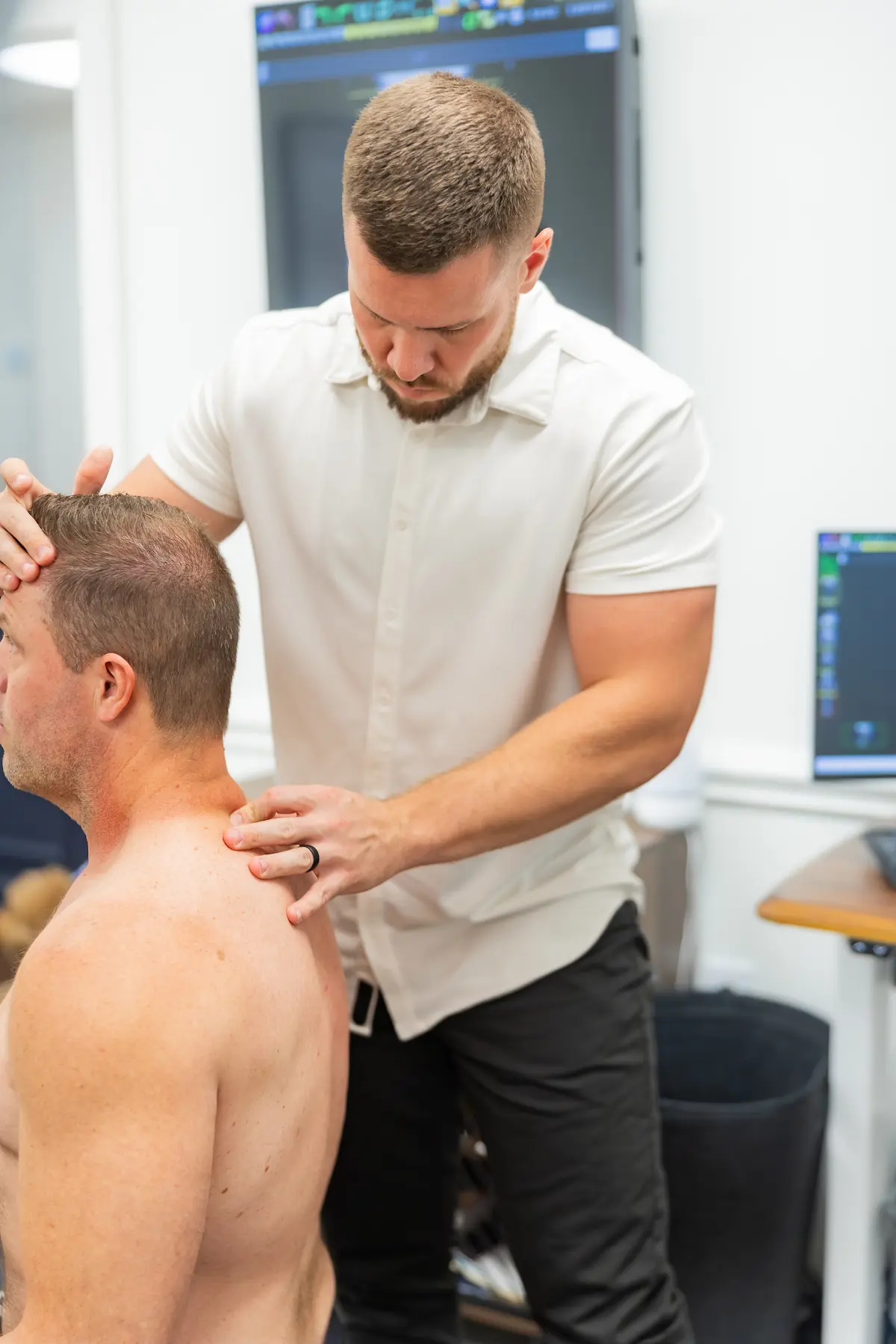
At our Southpark office in Charlotte, we do not guess. Each new patient receives a Gonstead chiropractic evaluation that combines palpation, Nervoscope readings, full-spine X-rays, and INSiGHT scanning. The thermal part of that scan reflects sympathetic nerve activity along each spinal level, and the HRV reading reflects overall autonomic balance. We re-scan during care so progress can be measured, not just felt.
Chiropractic care may help support healthier nervous system function as part of a broader plan that includes sleep, movement, nutrition, and stress management. It is not a replacement for medical care. When symptoms like fatigue persist despite “normal” test results, our functional medicine lab testing can help look deeper.
If you think your nervous system may be stuck in fight-or-flight, call (704) 469-4772 or request an appointment with Axiom Chiropractic.
Frequently Asked Questions
Is fight-or-flight sympathetic or parasympathetic?
Fight-or-flight is controlled by the sympathetic nervous system. The parasympathetic nervous system controls the opposite state, often called rest-and-digest.
Is anxiety sympathetic or parasympathetic?
Anxiety is mainly linked to an overactive sympathetic nervous system. A racing heart, shallow breathing, sweating, and a “wired” feeling are classic sympathetic responses. Practices that activate the parasympathetic side, such as slow breathing, may help ease these symptoms.
How can I activate my parasympathetic nervous system quickly?
Slow breathing with a longer exhale is one of the fastest options. Try inhaling for about 4 seconds and exhaling for 6 to 8 seconds for a few minutes. Humming, a short walk, or stepping away from screens may also help.
What does the vagus nerve have to do with the parasympathetic nervous system?
The vagus nerve is the main nerve of the parasympathetic nervous system. It carries rest-and-digest signals from the brainstem to the heart, lungs, and digestive organs. That is why vagus nerve exercises are often recommended for stress.
What is sympathetic dominance?
Sympathetic dominance describes a state where the fight-or-flight system stays active longer than it should, often because of chronic stress. It may show up as poor sleep, anxiety, digestive issues, tension headaches, or elevated blood pressure.
Can chiropractic care help balance the nervous system?
Chiropractic care focuses on the spine, which houses and protects the nerves that branch out to the body, including autonomic pathways. Some patients report better sleep and less tension during care, and tools like HRV testing can help track changes. Results vary, and chiropractic care works best alongside healthy lifestyle habits and appropriate medical care.
Axiom Chiropractic & Wellness Center serves Charlotte, NC and surrounding communities with expert Gonstead chiropractic care, advanced red light therapy, functional medicine, and specialized animal chiropractic. Led by Dr. Tyler Hartley and Dr. Megan Hullihen, we help families overcome back pain, neck pain, headaches, sciatica, and digestive issues through precise spinal corrections. Call (704) 469-4772 or schedule online to start your wellness journey today.

Axiom Chiropractic & Wellness Center serves Charlotte, NC and surrounding communities with expert Gonstead chiropractic care, advanced red light therapy, functional medicine, and specialized animal chiropractic. Led by Dr. Tyler Hartley and Dr. Megan Hullihen, we help families overcome back pain, neck pain, headaches, sciatica, and digestive issues through precise spinal corrections. Call (704) 469-4772 or schedule online to start your wellness journey today.