Cracking your own neck and back might give you a few seconds of relief, but it isn’t actually correcting anything, and doing it habitually can make things worse over time. That popping sound and the brief sense of release feel productive, but they’re not the same as fixing the underlying problem driving your stiffness. At Axiom Chiropractic in Southpark, we regularly see patients who’ve been self-cracking for years to chase relief that never lasts, because the habit addresses the symptom while leaving the actual issue in place.
What That Popping Sound Actually Is
First, let’s clear up what’s happening when you crack a joint. The popping sound is not bones grinding together, and it’s not anything being put back into place. The most widely accepted explanation is that the sound comes from gas bubbles within the joint fluid.
Your spinal joints are surrounded by a capsule filled with synovial fluid, which contains dissolved gases. When you stretch or twist a joint to crack it, you rapidly change the pressure inside the joint capsule. That pressure change causes the dissolved gas to form a bubble and release, producing the popping sound. This is why you can’t immediately crack the same joint again, it takes about 20 minutes for the gas to redissolve before another pop is possible.
So the sound itself is harmless and isn’t an indication that anything was realigned or corrected. It’s just gas releasing from the joint fluid.
Why It Feels Good (But Doesn’t Fix Anything)
The relief you feel after cracking your neck or back is real, but it’s temporary and it’s not coming from correcting a misalignment. A few things are happening.
Stretching the joint to crack it temporarily stimulates the stretch receptors and stretches the surrounding tissue, which produces a brief sense of release and can momentarily reduce the feeling of tension. There may also be a small, short-lived endorphin response. The result is that for a few seconds to a few minutes, the area feels looser and less tight.
But notice the pattern. If self-cracking actually fixed the problem, you wouldn’t need to do it again. The reason people crack the same spots over and over, sometimes compulsively throughout the day, is that the relief never lasts. The underlying restriction or misalignment that’s creating the tension is still there, so the tense, stiff feeling returns and the urge to crack comes back.
The Problem With Habitual Self-Cracking
Here’s where it goes beyond simply being ineffective. Habitually cracking your own neck and back can actually contribute to problems over time.
You Crack the Wrong Segments
When you twist your neck or back to crack it, you’re not targeting the specific joint that’s actually restricted. You can’t, you don’t have the precision or the diagnostic information to know which segment is the problem. Instead, the crack tends to happen at the segments that move most easily, the joints that are already mobile or even hypermobile.
This is the opposite of what you want. The restricted, stuck segment, the one actually causing your tension, doesn’t move when you crack. The already-loose segments around it move even more. Over time, this can increase instability in the mobile segments while the genuinely restricted one stays stuck.
You Can Create Hypermobility
Repeatedly stretching and cracking the same joints can gradually stretch out the ligaments that stabilize them. Ligaments don’t snap back perfectly when overstretched repeatedly. Over months and years, habitual cracking of the same segments can contribute to those joints becoming excessively loose, which creates its own set of problems, including instability, accelerated wear, and paradoxically, more of the tense, achy feeling that made you want to crack in the first place as surrounding muscles tighten to compensate for the instability.
You Mask a Problem That Needs Real Attention
Perhaps most importantly, the temporary relief from self-cracking can keep you from addressing the actual underlying issue. The chronic urge to crack a specific area is a signal that something there isn’t moving or functioning properly. Chasing that signal away with a quick pop, instead of finding out what’s driving it, means the real problem continues and often progresses.
How a Chiropractic Adjustment Is Different
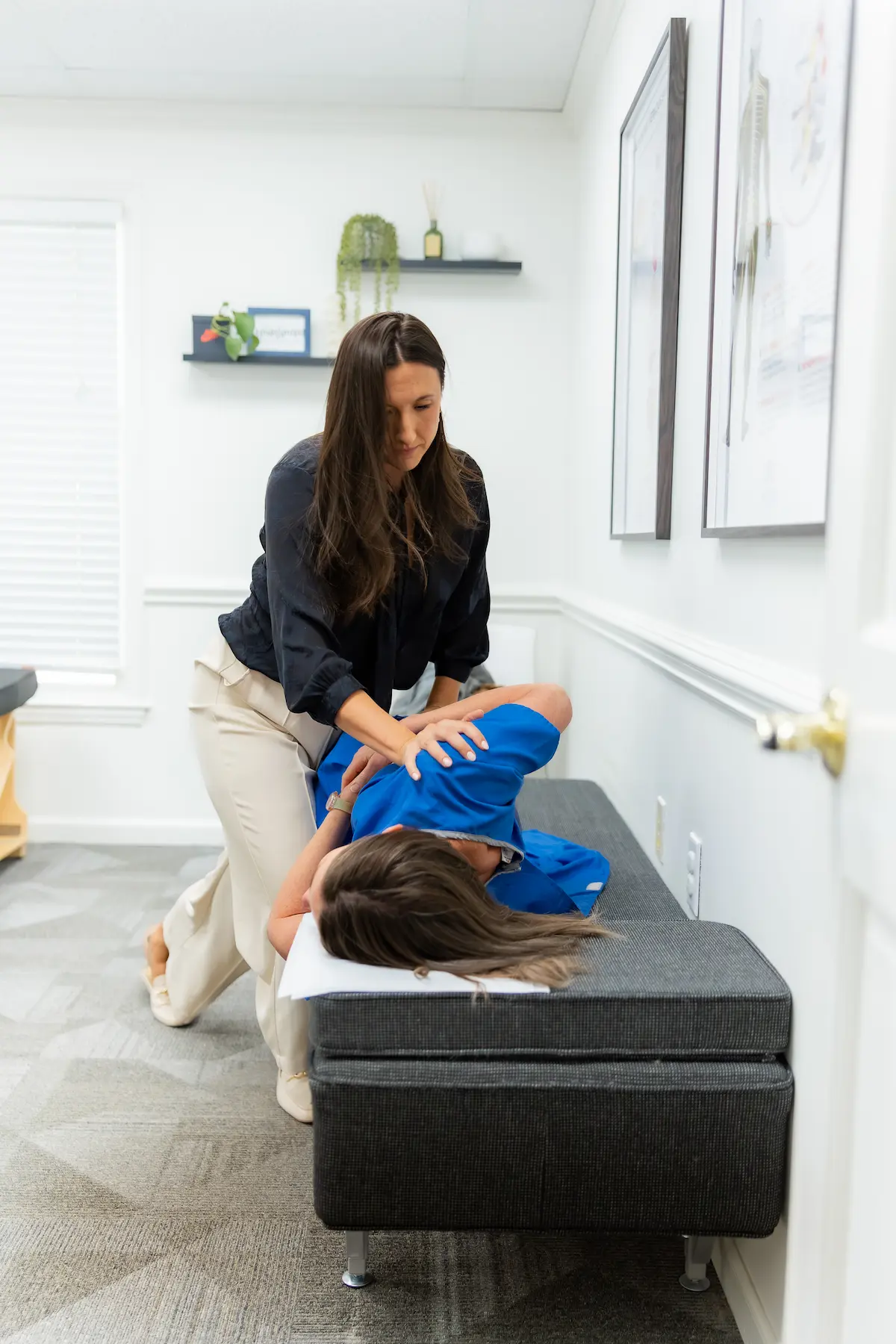
People sometimes assume that a chiropractic adjustment is just a more forceful version of cracking your own neck. It’s fundamentally different, and the difference is the entire point.
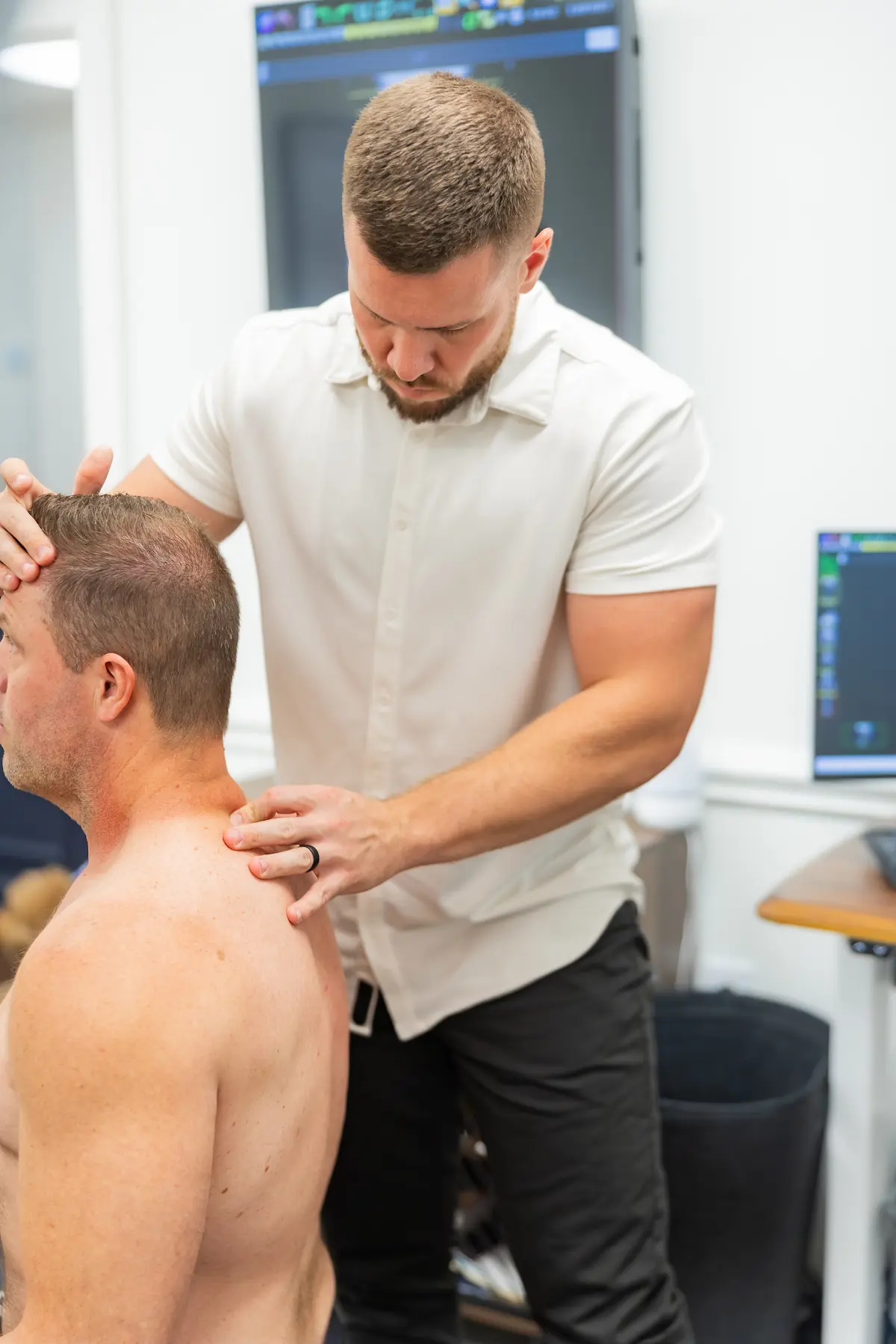
A self-crack is a general, imprecise movement of whatever segments happen to move easily, with no knowledge of which joint is actually the problem. A Gonstead chiropractic adjustment is the opposite, a specific correction directed at the exact segment that objective assessment has identified as restricted or misaligned.
At Axiom, before any adjustment is made, we use full-spine weight-bearing X-rays to see exactly which vertebrae are misaligned and in which direction, Nervoscope instrumentation to identify where nerve irritation is present, and palpation to confirm which segments aren’t moving properly. The adjustment is then delivered to that specific segment, with a specific line of drive and contact point, to restore proper motion and position to the joint that actually needs it, while leaving the healthy, mobile segments alone.
That’s why a proper adjustment addresses the underlying problem rather than just producing a sound. It’s targeting the stuck segment that self-cracking always misses. The popping sound may or may not occur during an adjustment, and it isn’t the goal, the goal is the specific correction.
If you’re someone who constantly feels the need to crack your neck, our post on neck pain explains what’s often driving that persistent tension, and for the back, our back pain page covers the common underlying causes.
What to Do Instead of Constantly Cracking
If you find yourself frequently needing to crack your neck or back, that urge is worth listening to, just not by cracking. It’s telling you a segment isn’t moving right. The more useful response is to find out which segment and why, and to address it properly.
Gentle range-of-motion movement, rather than forceful twisting to crack, can help maintain mobility without the downsides of habitual cracking. Slow, controlled movements through your neck and back’s natural range keep things mobile more safely. And addressing the underlying restriction through proper assessment and specific adjustment removes the cause of the urge rather than temporarily satisfying it.
Frequently Asked Questions
Is cracking my own neck dangerous?
Occasional gentle cracking is generally not harmful for most people. The bigger concerns are with aggressive, forceful self-cracking, particularly forceful rotation of the neck, and with compulsive habitual cracking over time, which can contribute to joint instability. The neck in particular has important structures, so forceful twisting is best avoided. If you feel the constant need to crack, that’s a signal worth addressing properly rather than a habit to intensify.
Why can I crack my back and it feels stuck again an hour later?
Because cracking doesn’t correct the underlying restriction. You’re getting brief relief from stretching the tissue and releasing joint gas, but the misaligned or restricted segment driving the tension is still there. As the temporary effect wears off, the stuck feeling returns. This cycle is the clearest sign that the real problem hasn’t been addressed.
Will getting adjusted stop me from needing to crack myself?
Often, yes. When the actual restricted segments are properly identified and corrected, the persistent tension that drives the urge to self-crack frequently resolves. Many patients find that once they’re under care and the underlying issue is addressed, the constant need to crack their neck or back fades because the cause is gone.
If you’re constantly cracking your neck or back chasing relief that never lasts, there’s a reason that urge keeps coming back. Call (704) 469-4772 or schedule a consultation at Axiom Chiropractic in Southpark and let’s address what’s actually driving it.

Axiom Chiropractic & Wellness Center serves Charlotte, NC and surrounding communities with expert Gonstead chiropractic care, advanced red light therapy, functional medicine, and specialized animal chiropractic. Led by Dr. Tyler Hartley and Dr. Megan Hullihen, we help families overcome back pain, neck pain, headaches, sciatica, and digestive issues through precise spinal corrections. Call (704) 469-4772 or schedule online to start your wellness journey today.