Tight hip flexors and hip flexor pain are among the most common musculoskeletal complaints in Southpark – affecting desk workers whose hip flexors shorten from hours of sitting, athletes whose training load stresses the hip complex, and anyone dealing with low back pain that doesn’t fully resolve. At Axiom Chiropractic, we find that persistent hip flexor tightness and hip pain almost always have a lumbar or pelvic component driving them – and that stretching and foam rolling, while useful, can’t resolve a problem that has a structural spinal root.
What the Hip Flexors Actually Are
The hip flexors are a group of muscles that cross the front of the hip joint and flex the thigh toward the torso. The primary hip flexor is the iliopsoas – a two-part muscle that consists of the iliacus (originating on the inner surface of the pelvis) and the psoas major (originating on the lumbar vertebrae from L1 through L5 and the intervertebral discs between them).
That lumbar origin is the detail that matters most for understanding why hip flexor problems so often involve the spine. The psoas major attaches directly to the lumbar vertebrae. It doesn’t just cross the hip – it connects the lumbar spine to the femur. When the psoas is chronically tight or dysfunctional, it pulls on the lumbar vertebrae with every step and every hip movement. When the lumbar spine is misaligned, it changes the resting tension and function of the psoas.
The relationship is bidirectional: lumbar misalignment creates psoas dysfunction, and psoas dysfunction perpetuates lumbar misalignment. Treating only the muscle without addressing the lumbar spine, or adjusting the lumbar spine without addressing the psoas tension, produces incomplete results in most cases.
Why Sitting Makes Hip Flexors Tight
Hip flexor tightness in desk workers is nearly universal – and the mechanism is straightforward. When you sit, the hip is flexed. The hip flexors are in their shortened position. Hold that position for six to eight hours a day, and the muscles adapt to the shortened length – they functionally tighten, and the neural drive that controls them shifts toward a higher baseline tone.
When you then stand up, those chronically shortened hip flexors pull the pelvis into anterior tilt – the front of the pelvis tips downward as the hip flexors tug on their pelvic attachments. Anterior pelvic tilt increases lumbar lordosis, compressing the lumbar facet joints and changing the load distribution through the lower lumbar discs. This is one of the primary mechanisms connecting prolonged sitting to low back pain.
The lumbar vertebrae are also being pulled on by the psoas throughout this process. Asymmetrical psoas tension – where one side is tighter than the other, which is extremely common – creates rotational pull on the lumbar vertebrae that contributes to specific lumbar subluxation patterns. This is why many desk workers in Southpark develop both hip flexor tightness and low back pain simultaneously – they’re two expressions of the same structural problem.
Hip Flexor Pain Patterns and What They Signal
Hip flexor pain presents differently depending on which structure is primarily affected and what’s driving the dysfunction:
Deep groin or front-of-hip pain that worsens when bringing the knee toward the chest, climbing stairs, or getting up from a chair is classic iliopsoas involvement. The pain is often described as a catching or pulling sensation at the hip crease.
Anterior thigh pain or weakness can signal compression of the femoral nerve (which passes through the iliopsoas) – often driven by lumbar misalignment at L2-L4 that irritates the nerve roots supplying the femoral nerve.
Low back pain that worsens with hip extension (walking, standing for long periods, lying flat) often has a tight psoas component – the muscle is pulling the lumbar vertebrae forward and increasing compression in extension.
Lateral hip pain or snapping hip may involve the tensor fasciae latae and the IT band – muscles that work closely with the hip flexors and are often secondarily involved when psoas dysfunction alters hip mechanics.
Pain that improves with lying face-down with the hip extended but worsens with sitting or walking typically signals shortened hip flexors as a primary driver – a useful clinical clue.
The Lumbar and Pelvic Assessment
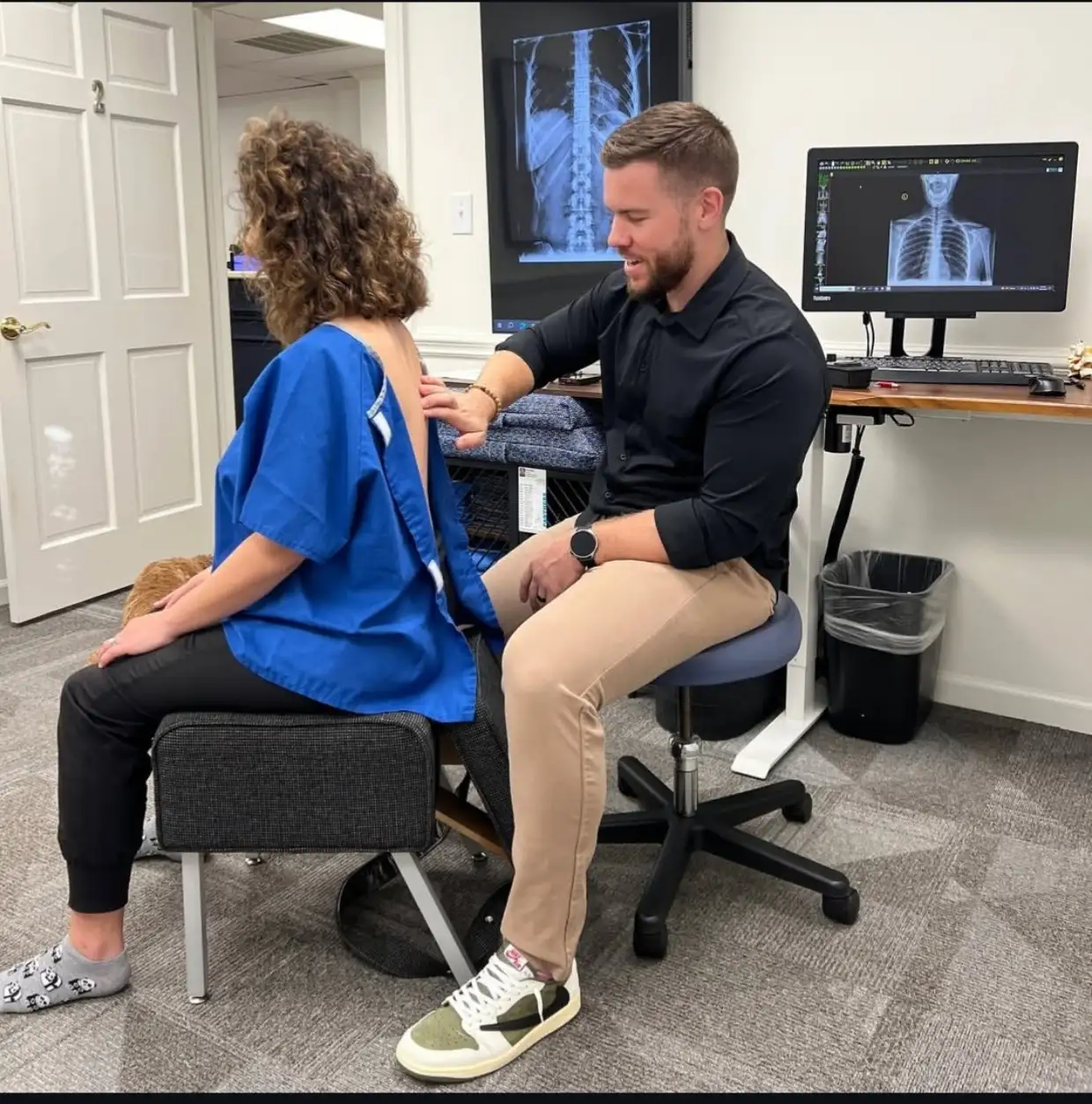
When a Southpark patient comes to Axiom with hip flexor pain or persistent tight hips, the assessment starts with the lumbar spine and pelvis – not just the hip itself.
Full-spine, weight-bearing X-rays show us the lumbar vertebral positions and the degree of anterior pelvic tilt. We look specifically at the L1 through L5 levels where the psoas originates and the sacroiliac joint alignment that determines pelvic position. Instrumentation scanning identifies nerve irritation at the lumbar levels that supply both the psoas and the femoral nerve. Palpation assesses the psoas tension bilaterally and the SI joint and lumbar mobility.
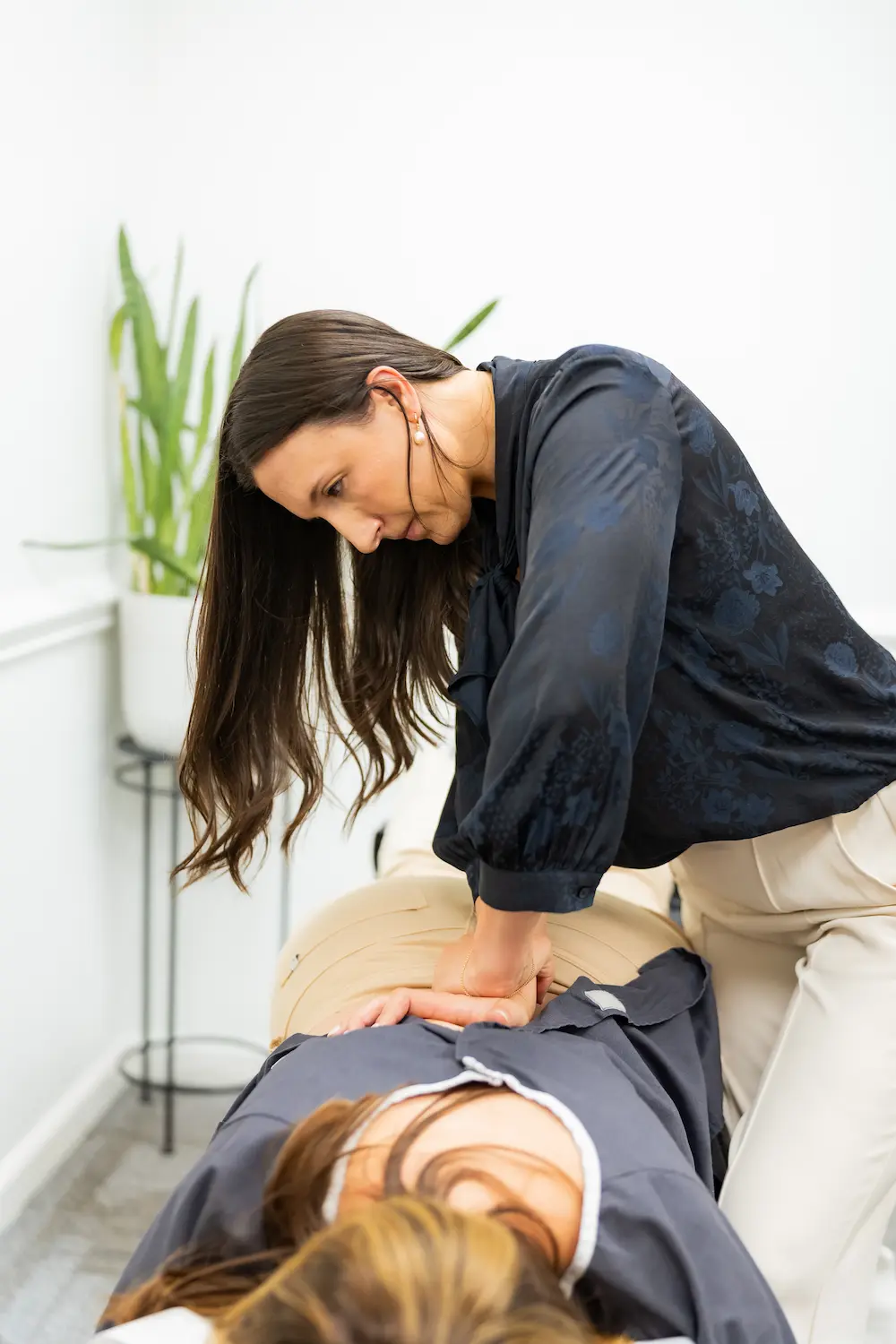
In most hip flexor cases, we find a specific lumbar subluxation pattern – most commonly at L2 or L3, occasionally at L4 – that correlates with the altered psoas function and the hip symptoms. Addressing that lumbar subluxation with specific Gonstead chiropractic correction changes the psoas’s neurological environment and the mechanical tension it’s under, which allows the hip flexor treatment to actually hold.
We also assess the sacroiliac joints for asymmetry – because SI joint dysfunction changes the pelvic foundation the hip flexors attach to, creating the uneven tension between sides that drives most unilateral hip flexor presentations.
Why Stretching Alone Doesn’t Fix It
This is the most common frustration we hear from hip flexor patients: “I stretch every day and it never gets better.”
Stretching works on the passive length of the muscle. It doesn’t address the neurological driver of the tightness. If the psoas is tight because a lumbar subluxation at L2 is creating altered nerve signaling that keeps the muscle in a state of elevated tone, stretching the psoas relieves the tension temporarily – but the nerve signal that’s creating the hypertonicity is still there. The muscle returns to its tight baseline within hours.
Similarly, if the psoas is tight because of anterior pelvic tilt driven by SI joint dysfunction, the muscle is being mechanically held in a shortened position by the pelvic misalignment. Stretching a muscle that is being held shortened by a structural misalignment upstream is fighting the structure rather than correcting it.
Correcting the lumbar subluxation and the pelvic alignment gives the hip flexors a structural environment in which they can actually release and maintain normal length. Stretching and strengthening exercises then become effective maintenance tools rather than futile attempts to override a persistent structural driver.
Hip Flexor Strengthening – The Other Side
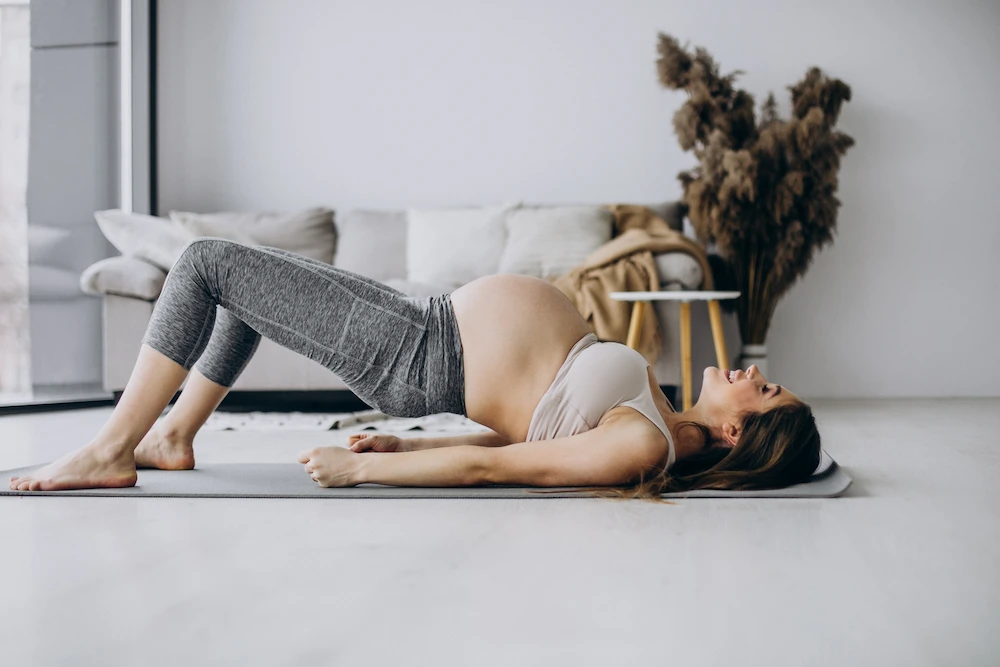
Tight hip flexors and weak hip flexors are not mutually exclusive – in fact, they often coexist. A chronically shortened, hypertonic psoas can also be neurologically inhibited, producing less effective force output than it should. This hip flexor weakness contributes to poor lumbopelvic stability, altered gait, and reduced athletic performance.
After structural correction of the lumbar and pelvic drivers, specific hip flexor strengthening – combined with core stabilization work that supports the corrected lumbar position – is often the appropriate next step. The sequence matters: correction first, then rehabilitation. Building strength into a structurally compromised system reinforces the dysfunction. Building strength into a corrected structural foundation reinforces the correction.
For athletes dealing with hip flexor issues affecting their training, our post on sports chiropractic in Southpark covers how structural correction fits into a performance and injury prevention strategy. For patients whose hip flexor pain connects to broader low back pain, our back pain condition page covers the lumbar and pelvic contributors in more detail.
Frequently Asked Questions
Can a chiropractor adjust the hip flexor directly?
Chiropractic care addresses the joints – the lumbar vertebrae and sacroiliac joints that drive psoas dysfunction – rather than directly manipulating the muscle belly. Soft tissue work on the psoas and hip flexors can be a useful adjunct, and we incorporate that when appropriate. But the primary intervention is correcting the structural drivers that are maintaining the muscle dysfunction, which produces more lasting change than soft tissue work alone.
How long before hip flexor tightness improves with care?
Many patients notice meaningful improvement in hip flexor tension within the first two to four weeks of consistent lumbar and pelvic correction. The timeline depends on how long the pattern has been present, how significant the structural drivers are, and whether the patient’s daily habits (particularly prolonged sitting) are being modified alongside care. Patients who address both the structural correction and the postural drivers tend to improve faster and maintain results better.
Is this related to my low back pain?
Almost certainly, yes – if both are present simultaneously. The psoas connects the lumbar spine to the hip, and dysfunction in either direction affects the other. Low back pain and hip flexor tightness co-occurring in the same patient, particularly in desk workers, almost always share a common structural driver in the lumbar spine or pelvis. Treating them together produces better results than treating each in isolation.
If hip flexor tightness or hip pain has been limiting your movement, your training, or your daily comfort in Southpark, the lumbar and pelvic picture deserves a proper look. Call (704) 469-4772 or schedule a consultation at Axiom Chiropractic and let’s find out what’s actually driving it.
Axiom Chiropractic & Wellness Center serves Charlotte, NC and surrounding communities with expert Gonstead chiropractic care, advanced red light therapy, functional medicine, and specialized animal chiropractic. Led by Dr. Tyler Hartley and Dr. Megan Hullihen, we help families overcome back pain, neck pain, headaches, sciatica, and digestive issues through precise spinal corrections. Call (704) 469-4772 or schedule online to start your wellness journey today.