
That stubborn knot between your shoulder blades that never seems to go away no matter how much you stretch, massage, or dig at it with a tennis ball is one of the most common complaints we hear, and the reason it won’t resolve is usually that the knot isn’t the real problem. It’s a symptom of something happening in your spine. At Axiom Chiropractic in Southpark, we see this constantly, and addressing the underlying cause is what finally releases a knot that’s been there for months or years.
Why That Knot Forms in the First Place
The area between your shoulder blades is the upper and mid back, the thoracic spine. The muscles here, including the rhomboids and the middle trapezius, are responsible for holding your shoulder blades back and supporting your upper back posture. When something causes these muscles to stay contracted and overworked, they form the tight, tender knots that so many people recognize.
The key question is why those muscles are staying contracted. And the answer usually traces back to one or both of two things: posture and spinal function.
The Posture Connection
Most people who deal with knots between the shoulder blades spend significant time in a forward-rounded posture, hunched over a computer, looking down at a phone, or sitting for long hours. In this position, the chest muscles tighten and shorten while the muscles between the shoulder blades get stretched and overworked as they strain to counteract the forward pull and hold you upright.
Those mid-back muscles are essentially fighting a losing battle all day, constantly working against the forward posture. They fatigue, stay contracted, and develop knots. This is why the knot keeps coming back even after a massage, the moment you return to your desk and your forward posture, the muscles go right back to being overworked.
The Spinal Function Connection
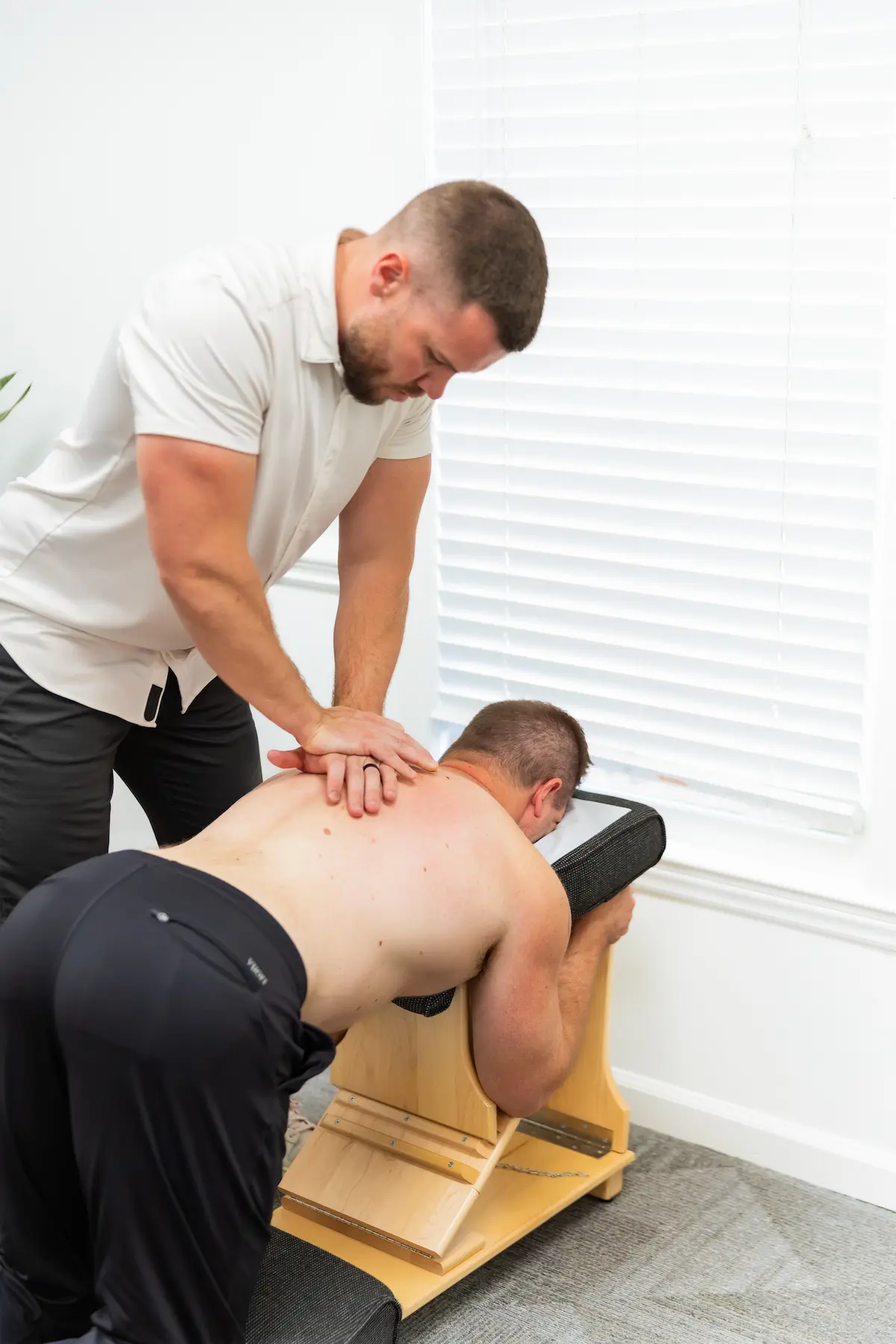
Here’s the part that’s most often missed. The thoracic spine, the vertebrae between your shoulder blades, can become misaligned and restricted, with individual segments that aren’t moving properly. When a thoracic vertebra is stuck or misaligned, it irritates the surrounding tissue and the nerves in the area, and the muscles around that segment respond by tightening protectively.
This creates a knot that is directly tied to the restricted spinal segment beneath it. No amount of massage or stretching will fully resolve it, because the muscle is tightening in response to the underlying joint dysfunction. Until that segment is moving properly again, the muscle has a reason to stay knotted.
This is the explanation for the knot that returns within hours or days of every massage. The massage addresses the muscle, which feels great temporarily, but the restricted thoracic segment driving the muscle tension is still there, so the knot reforms.
Why Massage and Stretching Alone Don’t Fix It
Massage, foam rolling, tennis balls against the wall, and stretching all target the muscle. They can provide real, if temporary, relief by relaxing the contracted tissue and increasing blood flow. The problem is that none of them address why the muscle is contracting in the first place.
If the knot is being driven by a restricted thoracic segment, working on the muscle leaves the actual cause untouched. If it’s being driven by sustained forward posture, the relief lasts only until you return to that posture. In both cases, the muscle work feels productive but the knot keeps coming back because the underlying driver, the spinal restriction, the postural load, or both, is still in place.
This is the single most common frustration we hear about these knots: “I’ve tried everything and it always comes back.” It comes back because the everything that’s been tried has all been aimed at the muscle, not at the cause.
How We Approach the Stubborn Knot at Axiom
When a Southpark patient comes in with a persistent knot between the shoulder blades, we assess the thoracic spine and posture to find what’s actually driving it.
Full-spine, weight-bearing X-rays show us the alignment and position of the thoracic spine, revealing misalignment, restricted segments, and the postural patterns, like increased forward rounding, that overload the mid-back muscles. Nervoscope instrumentation identifies areas of nerve irritation and inflammation in the thoracic region, which often pinpoints exactly where the restricted segment driving the knot is located. Palpation confirms which thoracic segments aren’t moving properly and how the muscle tension relates to them.
From there, specific Gonstead chiropractic adjustments restore proper motion and alignment to the restricted thoracic segments. When the underlying joint dysfunction is corrected, the muscle no longer has a reason to stay protectively contracted, and the knot can finally release and stay released. This is why addressing the spine often succeeds where months of massage didn’t, it removes the actual cause rather than repeatedly treating the symptom.
Because posture is so often involved, we also address the postural component, since a restricted segment that gets corrected will tend to become restricted again if the forward-rounded posture overloading it isn’t also improved. Our post on how poor posture affects more than your back covers the postural side in depth, and for desk workers specifically, our post on tech neck and desk workers explains the forward-posture pattern that drives so much upper back tension.
What You Can Do at Home
While care addresses the underlying cause, a few things help support the mid-back and keep the knot from being constantly re-aggravated.
Fix your workstation. Raising your monitor to eye level and setting up your chair to support an upright posture reduces the forward-rounded position that overloads the muscles between your shoulder blades. This is one of the highest-impact changes for desk workers.
Take posture breaks. Sustained position is the enemy. Standing up, moving, and gently squeezing your shoulder blades back every 30 to 45 minutes keeps the mid-back muscles from locking into their overworked, contracted state.
Strengthen the upper back. Once any underlying restriction is addressed, strengthening the muscles between the shoulder blades helps them hold better posture and resist the forward pull, reducing the tendency to knot up. We can guide you on appropriate exercises.
Open the chest. Gently stretching the chest muscles counteracts the tightness that develops from forward posture and reduces the opposing strain on the mid-back muscles.
Frequently Asked Questions
Why does my knot come back so fast after a massage?
Because massage addresses the muscle but not the cause. If a restricted thoracic segment or sustained forward posture is driving the muscle to contract, the knot will reform once the temporary effect of the massage wears off and you return to the position or the underlying restriction that caused it. The muscle keeps knotting because it still has a reason to.
Could a knot between my shoulder blades be related to my neck?
It can be. The upper thoracic spine and the lower neck are closely connected, and posture problems affecting one usually affect the other. Forward head posture, which loads the neck, typically comes with the rounded upper back posture that overloads the muscles between the shoulder blades. In many cases both areas are involved and benefit from being addressed together.
How long before the knot actually goes away with care?
It depends on how long it’s been there, how much thoracic restriction is present, and whether the postural driver is being addressed. Some patients notice the knot easing within a few weeks as the underlying segment is corrected. Lasting resolution usually comes from addressing both the spinal restriction and the posture, so the muscle no longer has a reason to keep tightening.
If you’ve got a knot between your shoulder blades that’s survived every massage, stretch, and tennis ball you’ve thrown at it, the answer is probably in your spine, not your muscle. Call (704) 469-4772 or schedule a consultation at Axiom Chiropractic in Southpark and let’s find out what’s really keeping it there.
Axiom Chiropractic & Wellness Center serves Charlotte, NC and surrounding communities with expert Gonstead chiropractic care, advanced red light therapy, functional medicine, and specialized animal chiropractic. Led by Dr. Tyler Hartley and Dr. Megan Hullihen, we help families overcome back pain, neck pain, headaches, sciatica, and digestive issues through precise spinal corrections. Call (704) 469-4772 or schedule online to start your wellness journey today.