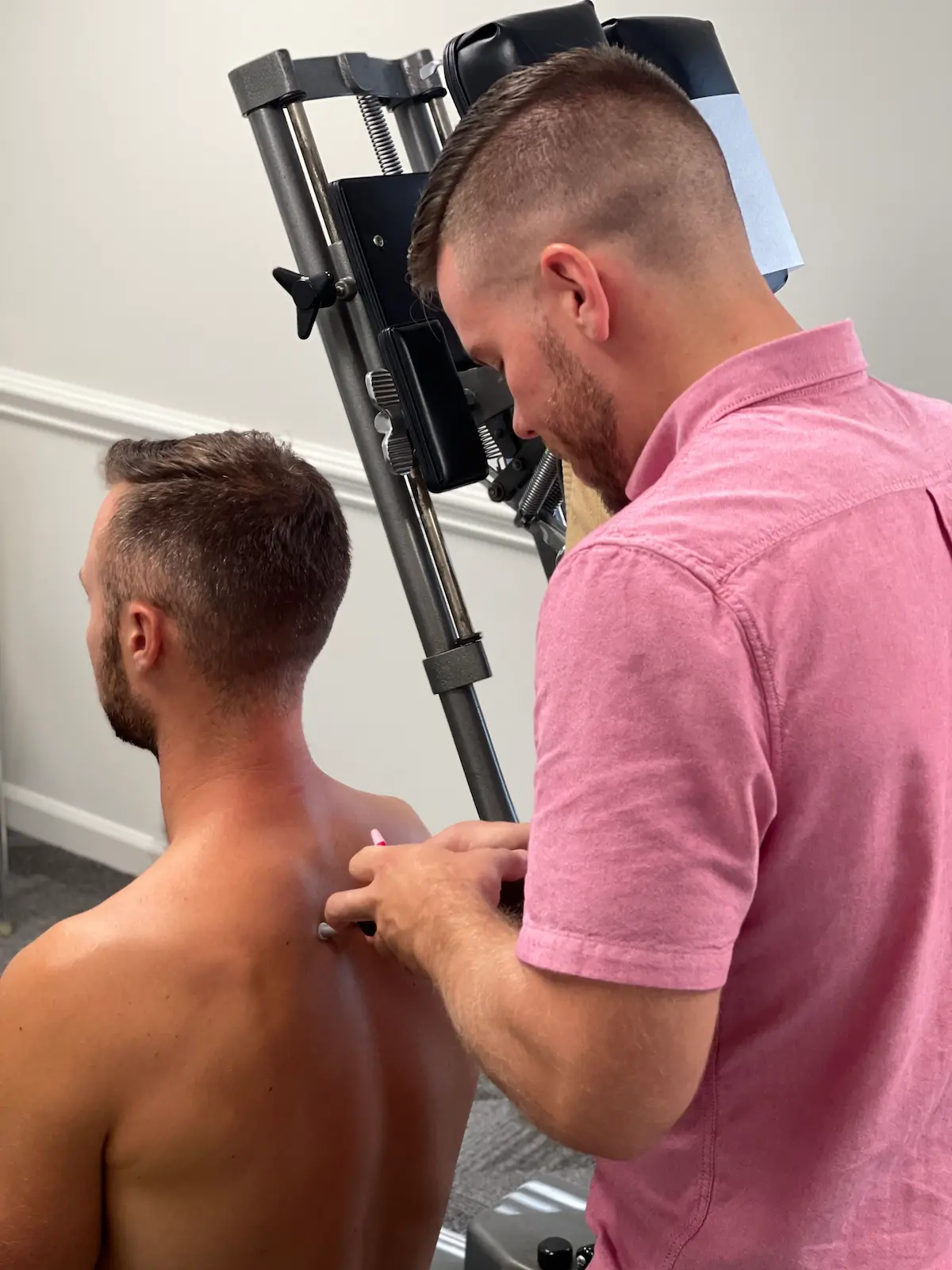

Sciatica during pregnancy is one of the most common and most undertreated sources of pain expectant mothers experience – and it’s often dismissed as something to simply endure until delivery. At Axiom Chiropractic in Southpark, Dr. Megan Hullihen works specifically with pregnant patients dealing with sciatic pain, using Webster Technique and Gonstead-based pelvic care to address the underlying cause safely and effectively at any stage of pregnancy. You don’t have to spend your third trimester unable to walk without shooting pain down your leg.
Why Pregnancy Causes Sciatica
Sciatica during pregnancy isn’t exactly the same condition as sciatica in a non-pregnant patient, and understanding the difference is important for treating it correctly.
In most non-pregnant adults, sciatica originates from lumbar disc herniation or spinal stenosis compressing the sciatic nerve roots as they exit the lumbar spine. This can happen in pregnancy too, but the more common pregnancy-specific mechanism is different: sacroiliac joint dysfunction and piriformis syndrome, both of which are directly driven by the hormonal and structural changes of pregnancy.
The Sacroiliac Joint Mechanism
The hormone relaxin, which loosens ligaments throughout the pelvis to prepare for delivery, also reduces the passive stability of the sacroiliac joints. With less ligamentous tension holding the SI joints in place, these joints become more susceptible to shifting and misalignment – particularly as the growing uterus shifts the center of gravity forward and changes the load distribution through the pelvis.
An SI joint misalignment alters the position of the sacrum – the large triangular bone at the base of the spine from which the sciatic nerve emerges on both sides. Even a small sacral misalignment can change the tension on the piriformis muscle and the surrounding structures in a way that compresses or irritates the sciatic nerve.
This mechanism explains why pregnancy sciatica often presents differently from disc-related sciatica – it’s typically more affected by movement and position changes, often worse when transitioning from sitting to standing or when walking, and frequently one-sided in a way that corresponds to the side of the SI joint dysfunction.
The Piriformis Mechanism
The piriformis muscle runs from the sacrum to the femur and sits directly adjacent to the sciatic nerve. In about 15% of people, the sciatic nerve actually passes through the piriformis rather than beneath it. As the pelvis widens and the gait changes during pregnancy, the piriformis is placed under altered mechanical stress that can cause it to tighten and compress the sciatic nerve.
Piriformis syndrome during pregnancy presents as deep buttock pain that radiates down the back of the leg – often described as similar to sciatica, because mechanically it is. The distinction from true lumbar radiculopathy matters for treatment but produces similar symptoms from the patient’s perspective.
The Weight and Postural Component
Beyond the SI joint and piriformis mechanisms, the progressive weight gain and postural shift of pregnancy loads the lumbar spine significantly. The exaggerated lumbar lordosis that develops to compensate for the growing anterior load compresses the lumbar facet joints and narrows the foraminal openings where lumbar nerve roots exit. In patients with existing lumbar disc issues or reduced disc height, this compression can tip into frank nerve root irritation.
Why Standard Sciatica Treatments Don’t Work Well in Pregnancy
The standard non-pregnant approach to sciatica – NSAIDs for inflammation, muscle relaxants for spasm, and in some cases epidural steroid injections – is largely off the table during pregnancy. Most NSAIDs are contraindicated in pregnancy, particularly in the third trimester. Muscle relaxants are generally avoided. Epidural injections are reserved for severe cases and require careful risk-benefit assessment.
Physical therapy exercises that work well for lumbar disc sciatica may aggravate SI joint sciatica in pregnant patients if not carefully adapted for the changes in pelvic stability and range of motion. Standard sciatica stretches that involve deep hip flexion or lumbar rotation can increase SI joint stress in already-lax pregnancy ligaments.
This is why chiropractic care – specifically Webster Technique and Gonstead-based pelvic correction – is often the most effective conservative option available for sciatic pain during pregnancy. It addresses the actual structural source of the nerve compression without medications and with techniques designed specifically for the pregnant pelvis.
How We Treat Pregnancy Sciatica at Axiom
When a pregnant Southpark patient comes in with sciatic symptoms, the assessment and treatment process is adapted entirely for pregnancy.
We don’t take X-rays during pregnancy. The assessment relies on postural analysis, motion palpation of the sacrum and SI joints, evaluation of piriformis tension, and the patient’s symptom history – which side the pain is on, when it started, what positions aggravate or relieve it, and how it’s changed as the pregnancy has progressed. This information, combined with hands-on palpation findings, gives us a clear picture of whether the primary driver is SI joint misalignment, piriformis involvement, or lumbar nerve root compression.
Webster Technique adjustments address the sacral misalignment component – restoring normal sacral position with a gentle, specifically directed correction that doesn’t involve any rotation or force on the abdomen. When piriformis tightness is contributing, targeted soft tissue work releases the piriformis tension that’s compressing the nerve. For patients with a lumbar component, gentle side-lying lumbar adjustments can address lower lumbar fixations without the prone positioning that becomes impractical in later pregnancy.
Dr. Megan’s Webster certification through the ICPA means she brings specific training in prenatal pelvic assessment and adjustment – not just general chiropractic applied to a pregnant patient. You can read more about her background on her bio page, and more about Webster Technique care generally in our prenatal chiropractic post.
What to Expect From Treatment
Pregnancy sciatica from SI joint dysfunction and piriformis syndrome typically responds well to consistent chiropractic care – often faster than disc-related sciatica because the structural driver is pelvic misalignment rather than disc herniation, which is more mechanically responsive to correction.
Many patients notice meaningful improvement within the first three to five visits. Because relaxin keeps ligament laxity elevated throughout pregnancy, particularly in breastfeeding mothers postpartum, corrections may need to be maintained more frequently than in a non-pregnant patient – the joints are more mobile and more prone to returning to dysfunction. Weekly or biweekly visits are common for pregnant sciatica patients, particularly in the third trimester when pelvic demands are greatest.
The goal isn’t just pain relief for the remainder of the pregnancy – it’s also preparing the pelvis for labor and delivery in as balanced and mobile a state as possible. A well-aligned pelvis with symmetrical muscle tension is associated with more efficient labor progress, and addressing pelvic dysfunction during pregnancy sets up a better starting point for postpartum recovery.
When to Seek Care
Don’t wait until the sciatic pain is severe or until you’re in the third trimester. The sooner pelvic misalignment is identified and corrected during pregnancy, the less secondary muscle tension and nerve irritation builds around it. Early second trimester care for emerging sciatic symptoms is far easier to manage than third trimester pain that has been present and building for months.
If you’re experiencing any of the following, a pelvic assessment is worthwhile: shooting or burning pain down one or both legs, deep buttock pain that worsens with walking or position changes, groin or inner thigh pain, difficulty bearing weight on one leg, or sharp pain when rolling over in bed.
For more on how sciatica works and what’s happening neurologically, our sciatica condition page covers the mechanism in detail.
Frequently Asked Questions
Is chiropractic adjustment safe for the baby?
Yes. Webster Technique and Gonstead-based prenatal adjustments are performed with specialized positioning that fully supports and protects the abdomen. No adjustment forces are directed toward the uterus or baby. The adjustments are directed at the sacrum and surrounding pelvic structures. Prenatal chiropractic care has been used safely throughout all three trimesters and has a strong safety record in the published literature.
I’m 36 weeks – is it too late to start?
It’s not too late. We see patients throughout the third trimester, including patients very close to their due date. Even a few visits to address acute pelvic misalignment and sciatic compression can produce significant relief and help prepare the pelvis for labor. Earlier is better, but late is still worthwhile.
Will the sciatica go away on its own after delivery?
Sometimes, but not reliably. SI joint dysfunction that is present at delivery often persists postpartum because the structural misalignment doesn’t self-correct just because relaxin levels eventually normalize. Many women find their pregnancy sciatica transitions directly into postpartum pelvic pain. Addressing it before delivery and continuing care postpartum is the most effective approach for complete resolution.
If sciatic pain is affecting your pregnancy in Southpark, it deserves proper evaluation and treatment – not just tolerance. Call (704) 469-4772 or schedule a consultation at Axiom Chiropractic with Dr. Megan and let’s get your pelvis functioning the way it should for the rest of your pregnancy.

Axiom Chiropractic & Wellness Center serves Charlotte, NC and surrounding communities with expert Gonstead chiropractic care, advanced red light therapy, functional medicine, and specialized animal chiropractic. Led by Dr. Tyler Hartley and Dr. Megan Hullihen, we help families overcome back pain, neck pain, headaches, sciatica, and digestive issues through precise spinal corrections. Call (704) 469-4772 or schedule online to start your wellness journey today.