Chiropractic care for athletes isn’t just about recovering from injuries – it’s about keeping the nervous system and musculoskeletal system performing at the level your training demands. At Axiom Chiropractic in Southpark, we work with athletes across a wide range of sports and training levels, and the consistent finding is the same: when the spine is aligned and the nervous system is functioning without interference, the body moves better, recovers faster, and stays healthier under load.
Why the Spine Is Central to Athletic Performance
Every movement an athlete makes is coordinated by the nervous system – and the nervous system lives in the spine. The speed and accuracy of nerve signals traveling from the brain to the muscles, and the feedback signals returning from the muscles and joints to the brain, determine reaction time, coordination, force production, and injury resilience.
When vertebral misalignments create interference at any point in that pathway, the signals slow down. Muscle activation patterns become less precise. Coordination suffers in ways that may be subtle enough that the athlete doesn’t consciously notice them, but significant enough to affect performance under competitive conditions.
This is why many professional and elite athletes use chiropractic care not only for injury treatment but as a regular maintenance practice. The nervous system advantage of a well-aligned spine is real – and it compounds over a season or a career.
The Performance Benefits Southpark Athletes Report
Athletes who maintain consistent chiropractic care alongside their training regularly report a set of improvements that go beyond pain relief:
Better range of motion. Joint mobility is directly affected by the alignment of the spinal segments that supply those joints neurologically. When cervical and thoracic misalignments are corrected, shoulder mobility often improves. When lumbar and pelvic alignment is restored, hip flexibility and stride length frequently change. Athletes are sometimes surprised to find that mobility gains they attributed to stretching were actually responses to spinal correction.
Faster recovery between sessions. Recovery from training is a nervous system-dependent process. The parasympathetic nervous system drives tissue repair, inflammation resolution, and metabolic restoration after exercise. A spine under chronic stress keeps the sympathetic system activated, which suppresses parasympathetic recovery function. Athletes under chiropractic care often find they’re less sore the day after training and ready to perform again sooner.
Reduced injury frequency. This is the outcome that matters most over a full season. Misaligned spinal segments alter the way force is transmitted through the body – creating compensatory movement patterns that place abnormal load on joints and soft tissues. Correcting those misalignments normalizes force transmission, which reduces the wear patterns that lead to overuse injuries.
Improved proprioception and coordination. Proprioception – the body’s sense of its own position in space – is a function of nerve signals from joint receptors throughout the spine and extremities. Spinal misalignments disrupt those signals. Athletes who restore spinal alignment frequently describe feeling more precise in their movements, more balanced under load, and more connected to what their body is doing in space.
Injury Recovery: Where Gonstead Specificity Matters Most
When athletes do get injured, the speed and completeness of recovery depends heavily on whether the underlying structural contributors are identified and corrected – not just the symptomatic tissue.
A hamstring strain that keeps re-tearing often has a lumbar or sacral misalignment driving the chronic tension in that muscle group. A shoulder that keeps impinging despite physical therapy may have a cervical or upper thoracic misalignment affecting the nerve supply to the rotator cuff muscles. A knee that won’t fully settle may have a pelvic alignment issue altering the mechanics of how force travels through the leg.
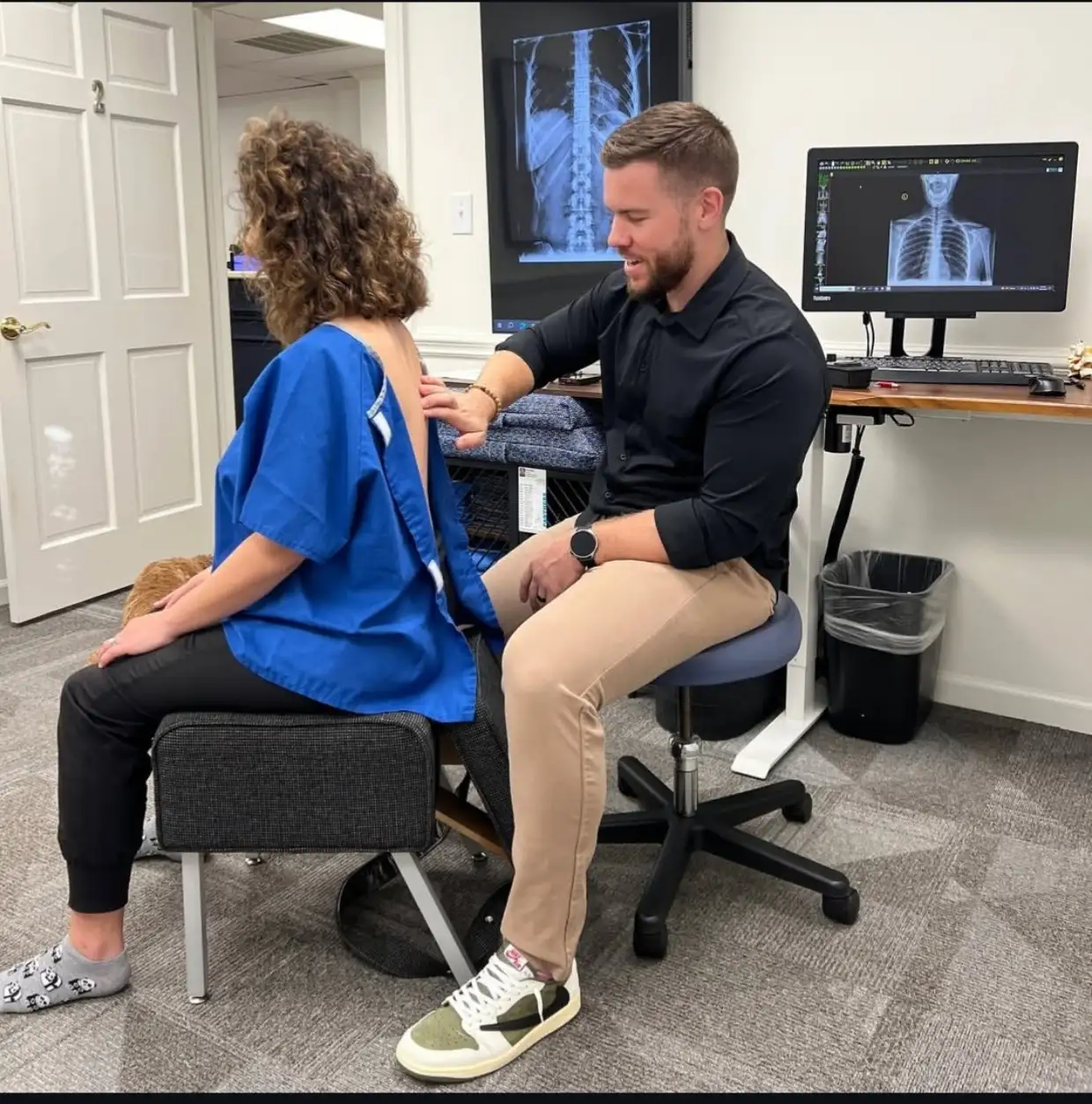
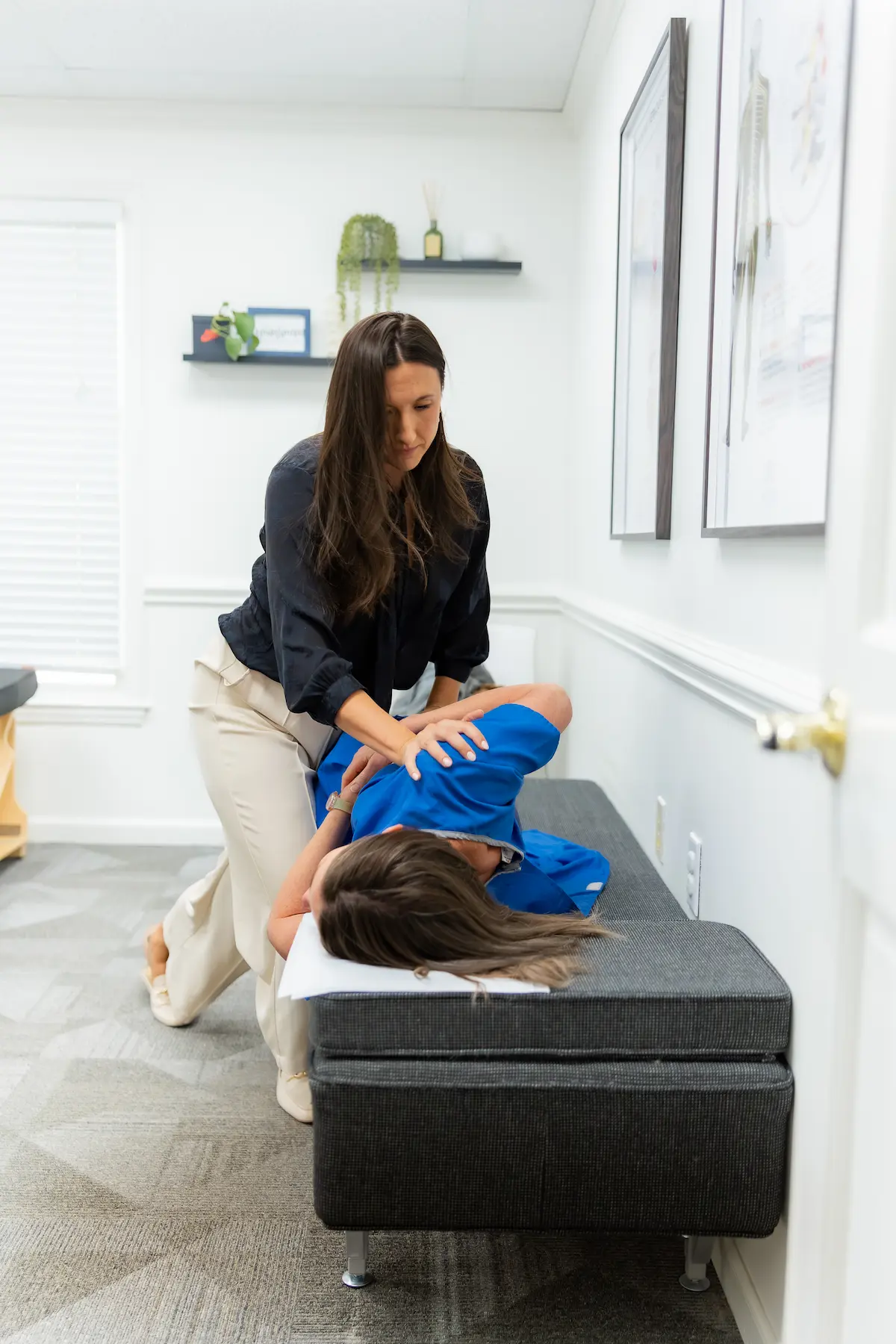
The Gonstead assessment we use at Axiom is built to find these structural contributors – not just to treat where it hurts. Full-spine weight-bearing X-rays show how the entire structure is loaded. Nervoscope instrumentation identifies nerve irritation at specific spinal levels that correlate with the athlete’s injury pattern. Specific adjustments address those levels precisely without the rotational forces that can aggravate recently injured tissue.
This is the distinction between chiropractic that accelerates genuine recovery and chiropractic that provides temporary relief while the underlying driver persists. For competitive athletes whose training timelines matter, getting to the actual cause is the difference between a week off and a month off.
Our extremity pain page covers how spinal misalignment contributes to shoulder, knee, and hip injuries in more detail – the most common sites for athletic overuse and acute injury.
Red Light Therapy for Athletic Recovery
For Southpark athletes looking to optimize recovery, the combination of Gonstead chiropractic and red light therapy represents one of the most effective non-pharmacological approaches available.
Photobiomodulation at the 660nm and 850nm wavelengths used in our medical-grade panels directly reduces inflammatory markers in muscle tissue, accelerates satellite cell activation for muscle repair, and supports mitochondrial function in fatigued cells. The practical result is meaningfully reduced delayed-onset muscle soreness and faster tissue repair between training sessions.
Some athletes use red light therapy proactively before competition or hard training to prepare muscles and reduce fatigue onset. Others use it primarily post-training for recovery. Many use both approaches. The evidence supporting pre- and post-exercise photobiomodulation in athletic populations is strong – and our red light therapy service page has more detail on the specific mechanisms and evidence base.
Sport-Specific Considerations
Runners and Cyclists
Repetitive single-plane movement in running and cycling creates predictable spinal and pelvic stress patterns. Lumbar and sacroiliac misalignments are extremely common in both sports – and they produce the hip, knee, and IT band problems that sideline so many Southpark runners and cyclists. Pelvic alignment assessment and correction is often the missing piece for athletes who’ve tried every soft tissue treatment without lasting resolution.
Overhead Athletes – Tennis, Baseball, Swimming
Athletes who repeatedly load the shoulder in overhead positions place significant demands on the cervical and upper thoracic spine. The rotator cuff muscles receive their nerve supply primarily from C5 and C6 – the levels most commonly affected by the cervical loading patterns overhead athletes develop. Cervical correction in these athletes often produces immediate improvements in shoulder strength and stability that neither shoulder-specific training nor local treatment achieves.
Contact Sports – Football, Soccer, Wrestling, Rugby
Contact athletes sustain repeated cervical and thoracic impacts that accumulate as misalignment over a season. Proactive assessment and correction throughout a competitive season – not just when symptoms become acute – keeps the spine from developing the cumulative dysfunction that contributes to both performance decline and increased injury risk as the season progresses.
Weightlifters and CrossFit Athletes
Heavy axial loading in squats, deadlifts, and Olympic lifts places enormous compressive demands on spinal segments that must be properly aligned to distribute that load safely. Lumbar and thoracic misalignments in heavy lifters alter the mechanics of how load is transferred through the spine, increasing disc stress and facet joint loading at specific levels. Regular chiropractic assessment for strength athletes is a genuine injury prevention strategy, not just a recovery tool.
Maintenance Care During a Season
The optimal chiropractic strategy for active athletes isn’t to wait for pain and then seek care. It’s to maintain structural alignment throughout a competitive season so that the nervous system and musculoskeletal system stay at peak function and minor misalignments don’t develop into injuries.
Most competitive athletes benefit from visits every two to four weeks during their active season – more frequently during periods of high training load or after significant physical stress. The goal of these visits isn’t correction of major dysfunction but maintenance of the structural baseline established during the initial care plan, with early identification and correction of new misalignments before they become symptomatic.
Many of the Southpark athletes who train at our practice describe their regular chiropractic visits as non-negotiable parts of their training plan – in the same category as sleep and nutrition, not an optional extra when something hurts.
Frequently Asked Questions
When during training should I schedule chiropractic visits?
There’s no single right answer, but most athletes find visits work best either the day after a hard training session (as part of the recovery process) or on a lighter training day. Visits the day before competition are generally fine – most athletes feel better, not worse, after an adjustment. We’ll discuss timing relative to your specific training schedule at your initial consultation.
Can chiropractic help with sports-related headaches?
Yes, and this is a significant concern for contact sport athletes. Cervical misalignments from repeated impacts are among the most common drivers of post-exertional headaches in contact athletes. Our existing content on headaches and migraines covers the cervical mechanism in detail. For athletes with concussion history, the cervical spine assessment is especially important – many persistent post-concussion symptoms have a cervicogenic component.
Do professional athletes really use chiropractic care?
Yes – and across essentially every major professional sport. NFL, NBA, MLB, PGA, and Olympic programs routinely employ chiropractors as part of their medical staff. The performance and recovery benefits are well-recognized at the highest levels of sport. Our Southpark patients who are serious recreational, collegiate, and competitive athletes have access to the same quality of specific, data-driven chiropractic care.
If you’re an athlete in Southpark and your performance or recovery isn’t where it should be, your spine deserves a closer look. Call (704) 469-4772 or schedule a consultation at Axiom Chiropractic and let’s find out what a well-aligned nervous system can do for your training.
Axiom Chiropractic & Wellness Center serves Charlotte, NC and surrounding communities with expert Gonstead chiropractic care, advanced red light therapy, functional medicine, and specialized animal chiropractic. Led by Dr. Tyler Hartley and Dr. Megan Hullihen, we help families overcome back pain, neck pain, headaches, sciatica, and digestive issues through precise spinal corrections. Call (704) 469-4772 or schedule online to start your wellness journey today.