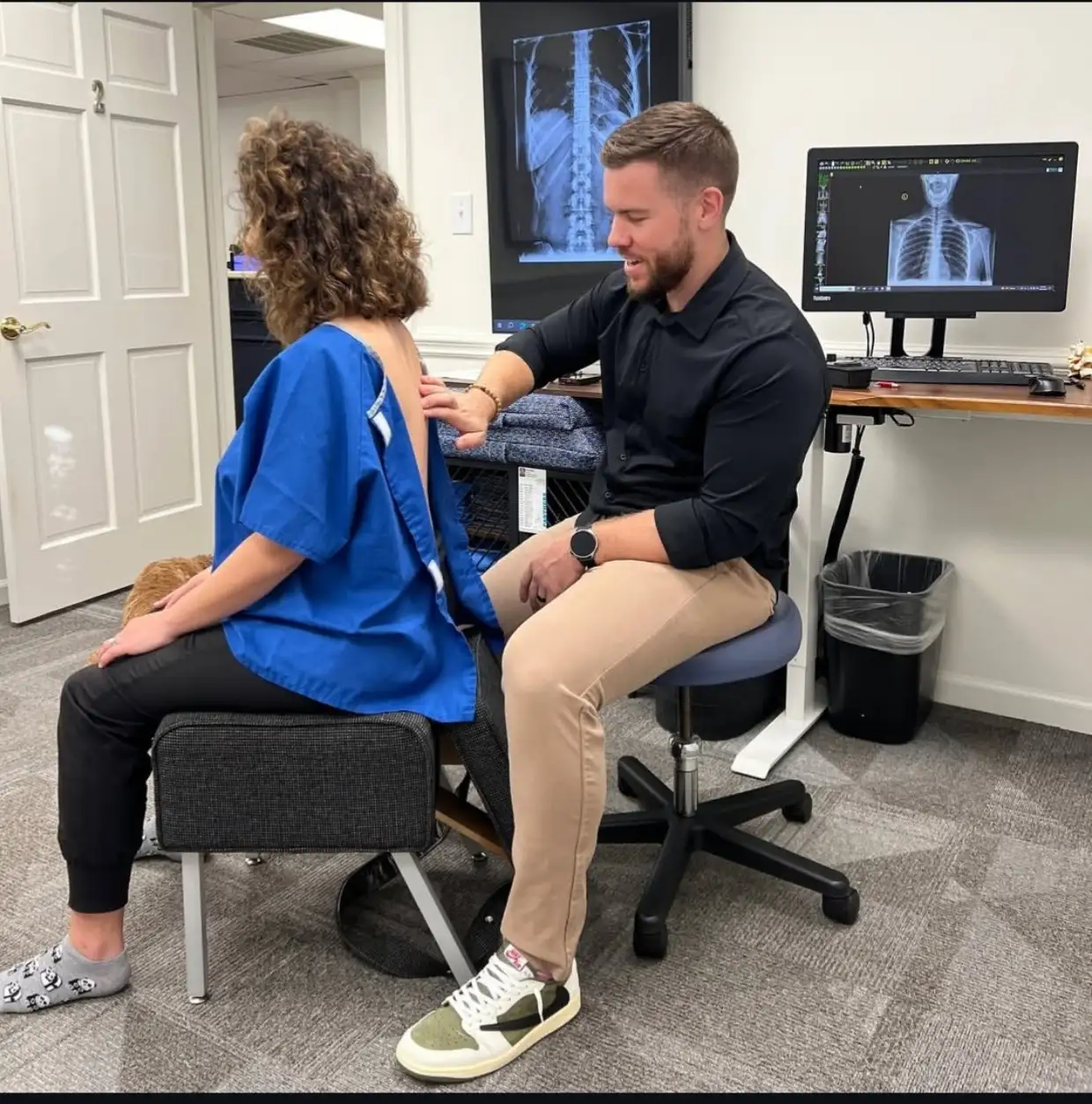

The connection between hormones and spinal health runs in both directions – hormonal imbalances make spinal problems worse, and spinal misalignments disrupt the nerve pathways that regulate hormone-producing glands. At Axiom Chiropractic in Southpark, we see this interaction play out regularly in patients who are frustrated that treating only one side of the equation hasn’t resolved their symptoms. The combination of Gonstead chiropractic correction and functional medicine blood work gives us the tools to address both sides – which is where the most meaningful and lasting results come from.
How Hormones Affect the Musculoskeletal System
Hormones are chemical messengers that regulate virtually every system in the body – including the tissues that make up your spine, muscles, and joints. When hormone levels shift outside their optimal ranges, the musculoskeletal system pays a real and measurable price.
Cortisol and Chronic Pain
Cortisol is the primary stress hormone, produced by the adrenal glands in response to physical and psychological stress. In the short term, cortisol is anti-inflammatory – it dampens the acute inflammatory response. This is useful for acute injury recovery.
The problem develops with chronic stress. When cortisol is chronically elevated, it begins to break down the structural proteins in muscle and connective tissue (catabolism), impairs collagen synthesis in spinal discs and ligaments, and disrupts the normal inflammatory balance in ways that make chronic pain harder to resolve. Patients with chronically elevated cortisol often find that their adjustments don’t hold as well – the tissue environment is working against structural correction.
Conversely, patients with burned-out adrenal function (blunted cortisol patterns after prolonged stress) lose the anti-inflammatory protection cortisol normally provides. Joint inflammation becomes more persistent, tissue healing slows, and the chronic pain that was once intermittent becomes more constant.
Both patterns – high cortisol and blunted cortisol – show up regularly in our functional medicine assessments of Southpark patients who are under chiropractic care but not progressing as expected.
Thyroid Hormones and Musculoskeletal Health
Thyroid hormones regulate metabolic rate, protein synthesis, and cellular energy production throughout the body. The musculoskeletal system is among the most directly affected.
Low thyroid function (hypothyroidism, or subclinical hypothyroidism that doesn’t yet meet the diagnostic threshold) slows tissue repair. Collagen synthesis decreases. Tendons and ligaments become less resilient. Muscles develop increased tone and stiffness that doesn’t respond normally to stretching or manual therapy. Patients with unidentified low thyroid function often describe feeling like their body “doesn’t recover” – they’re sore longer after activity, their adjustments provide less lasting relief, and their muscle tension seems to rebuild faster than it should.
Joint pain and morning stiffness are classic thyroid symptoms that are frequently misattributed to other causes. Many Southpark patients who present to Axiom with diffuse joint pain and fatigue that doesn’t have a clear spinal origin turn out to have thyroid patterns that explain much of what they’re experiencing.
Estrogen, Testosterone, and Joint Stability
Sex hormones directly influence joint laxity and the structural integrity of the ligaments and tendons supporting spinal segments. Estrogen plays a significant role in maintaining ligament stiffness – which is why women experience increased joint laxity during pregnancy (as estrogen and relaxin rise) and during perimenopause (as estrogen declines and ligament integrity decreases).
The practical implication for chiropractic patients: declining estrogen in perimenopausal and postmenopausal women often makes spinal corrections harder to maintain. Ligament laxity increases, and the passive stability that helps keep vertebrae in their corrected positions decreases. This isn’t a reason to stop chiropractic care – it’s a reason to simultaneously address the hormone picture through functional medicine evaluation.
Testosterone has similar effects in men – it supports muscle mass, tendon integrity, and bone density. Low testosterone, which is increasingly common and increasingly recognized in adult men, produces musculoskeletal symptoms including reduced muscle tone, slower recovery from physical stress, and joint pain that has a similar diffuse, hard-to-localize quality to low thyroid symptoms.
Vitamin D: The Hormone That Acts Like a Vitamin
Vitamin D is technically a steroid hormone, not a vitamin – and it has profound effects on musculoskeletal health. Vitamin D deficiency impairs calcium absorption, reducing bone density and increasing fracture risk. But it also directly affects muscle function, tendon health, and the inflammatory balance in spinal discs and joints.
Low vitamin D is associated with chronic musculoskeletal pain, slower tissue healing, and increased susceptibility to the type of spinal disc degeneration that drives chronic back pain. It’s one of the most commonly suboptimal markers we find in functional blood work assessments – and correcting it produces tangible improvements in how patients feel and how well they respond to chiropractic care.
How the Spine Affects Hormone Regulation
The other direction of this relationship is equally important – and it’s where chiropractic care becomes directly relevant to hormonal health, not just a parallel treatment.
The adrenal glands, thyroid, and reproductive organs all receive their nerve supply through the spine. The adrenals are innervated primarily through the thoracic and upper lumbar spine. The thyroid is regulated through the cervical and upper thoracic spine. The reproductive organs receive nerve supply from the lumbar and sacral regions.
When vertebral misalignments create chronic nerve irritation at these levels, the nerve signals traveling to and from these glands are disrupted. The glands receive abnormal input, which over time can contribute to dysregulated output. This is a plausible mechanism – though we’re careful to note the clinical research is still developing – for why some patients see improvements in hormonal symptoms as their spinal alignment is corrected.
What we observe consistently in practice is that patients who address both spinal alignment and hormonal balance simultaneously tend to improve more completely than those who address only one. The nervous system and the endocrine system are not separate – they’re deeply interconnected, and treating them as such produces better outcomes.
The Axiom Integrated Approach
This is precisely why Axiom offers both Gonstead chiropractic and functional medicine blood work under one roof. The combination isn’t coincidental – it reflects a genuine understanding that structural correction and biochemical optimization are complementary, not competing approaches.
When a Southpark patient comes in with chronic back pain that isn’t responding as expected to chiropractic care, one of the first questions we ask is whether we’ve looked at the hormonal and biochemical environment. Is cortisol dysregulation preventing tissue repair? Is low thyroid function slowing recovery? Is vitamin D deficiency compromising disc and ligament health? Is estrogen decline making it harder to maintain spinal corrections in a perimenopausal patient?
The functional blood work assessment we run uses individualized optimal ranges rather than the broad disease-threshold ranges used in standard lab panels. This means we identify suboptimal hormonal patterns that a routine blood test would label “normal” – the gap where patients are genuinely affected but technically within range.
Once those patterns are identified, we build a targeted protocol: specific nutritional interventions, supplementation where appropriate, lifestyle modifications, and referral for medical management when medications are indicated. The protocol runs alongside the chiropractic care plan – not instead of it.
Who This Matters Most For
A few patient presentations where the hormone-spine connection is particularly worth investigating:
Patients whose adjustments don’t hold. If corrections made in the office consistently revert within days, the tissue environment – ligament laxity from hormonal changes, inflammatory load from cortisol dysregulation, poor collagen synthesis from low thyroid or vitamin D – may be working against structural stability.
Perimenopausal and postmenopausal women with new or worsening back and joint pain. The hormonal shift of menopause affects musculoskeletal tissue directly. This population often responds exceptionally well to the combination of chiropractic correction and functional hormone support.
Patients with chronic fatigue alongside chronic pain. The overlap of fatigue and musculoskeletal pain almost always has a hormonal component – thyroid, cortisol, vitamin D, and iron status are the most common contributors and all are identifiable through functional blood work.
Men over 40 with muscle weakness, slow recovery, and diffuse joint pain. Testosterone decline is underdiagnosed and underappreciated as a musculoskeletal problem in men. The symptoms look a lot like “just getting older” – but many are correctable.
Frequently Asked Questions
Do I need to be a chiropractic patient at Axiom to access the functional medicine service?
No. Functional medicine blood work is available independently. That said, most patients who engage with both services find the integrated approach more effective than either alone – and our ability to interpret findings in the context of your spinal and nervous system health is a genuine advantage over a stand-alone functional medicine consult.
What hormones does the functional blood work panel actually test?
The panel is customized based on your history and symptoms, but typically includes a full thyroid panel (TSH, Free T3, Free T4, Reverse T3, antibodies), cortisol and adrenal markers, sex hormones (estrogen, testosterone, DHEA), fasting insulin and HbA1c, vitamin D, ferritin, and inflammation markers including hsCRP and homocysteine. This is significantly more comprehensive than what most annual physicals include.
How long before hormonal interventions start to affect how I feel?
Nutritional and supplementation interventions typically produce noticeable effects within four to eight weeks, with more complete normalization at the three to six month mark for patients who are consistent. The timeline varies depending on how far outside optimal range the markers were and how the body responds to the specific interventions. We re-test at appropriate intervals to track objective progress.
If you’ve been managing chronic pain, fatigue, or stubborn musculoskeletal symptoms in Southpark without looking at the hormonal side of the picture, there may be a significant missing piece in your recovery. Call (704) 469-4772 or schedule a consultation at Axiom Chiropractic and let’s take a complete look at what’s driving your symptoms.
Axiom Chiropractic & Wellness Center serves Charlotte, NC and surrounding communities with expert Gonstead chiropractic care, advanced red light therapy, functional medicine, and specialized animal chiropractic. Led by Dr. Tyler Hartley and Dr. Megan Hullihen, we help families overcome back pain, neck pain, headaches, sciatica, and digestive issues through precise spinal corrections. Call (704) 469-4772 or schedule online to start your wellness journey today.