If you deal with jaw pain, clicking, or difficulty opening your mouth, the source may not be your jaw alone, it’s often connected to the alignment of your upper neck. TMJ dysfunction and the upper cervical spine are closely linked, because the joints, muscles, and nerves of the jaw and the top of the neck work together as an integrated system. At Axiom Chiropractic in Charlotte, we help TMJ patients by addressing the upper cervical component that jaw-focused treatment often overlooks.
What TMJ Dysfunction Actually Is
TMJ stands for the temporomandibular joint, the joint that connects your jaw to your skull, located just in front of each ear. TMJ dysfunction, sometimes called TMD, refers to problems with this joint and the muscles that control it. It’s surprisingly common and can produce a frustrating range of symptoms.
People with TMJ dysfunction often experience jaw pain or tenderness, clicking or popping when opening and closing the mouth, difficulty or discomfort chewing, a jaw that locks or catches, and aching around the ear. It’s also frequently associated with headaches, facial pain, and neck tension, which is a clue to how interconnected the jaw and neck really are.
The Upper Neck Connection
Here’s what makes the jaw-neck relationship so important, and why treating the jaw in isolation often falls short.
The upper cervical spine, particularly the top vertebrae just below the skull, has a direct anatomical and neurological relationship with the jaw. The nerves in this region are closely connected to the nerves that serve the face and jaw. In fact, the sensory input from the upper neck and from the jaw converge in the same area of the brainstem, meaning the two systems share neurological wiring.
There’s a mechanical relationship too. The position of your head and upper neck directly affects the resting position and mechanics of your jaw. When the upper cervical spine is misaligned, or when forward head posture shifts the head’s position, it changes how the jaw sits and functions. This can create or worsen TMJ dysfunction by altering the balance of the muscles that control the jaw and changing the way the joint tracks when you open and close.
Forward head posture is a particularly common contributor. When the head juts forward, as it does for so many people who spend time at screens, it changes the pull of the muscles connecting the head, neck, and jaw. This altered muscle balance can stress the temporomandibular joint and contribute to the pain, clicking, and dysfunction that define TMJ problems.
Why Jaw-Only Treatment Often Isn’t Enough
Many people with TMJ dysfunction are treated with approaches focused solely on the jaw, night guards, jaw exercises, or dental interventions. These can help, particularly a night guard for those who clench or grind. But if the upper cervical spine is contributing to the problem, addressing only the jaw leaves part of the cause untouched.
This is why some people find that their TMJ symptoms persist or keep returning despite jaw-focused treatment. The clenching, the muscle imbalance, and the joint stress may be partly driven by upper cervical misalignment and postural issues that were never addressed. Treating the jaw without considering the neck is treating half the picture.
How We Approach TMJ at Axiom
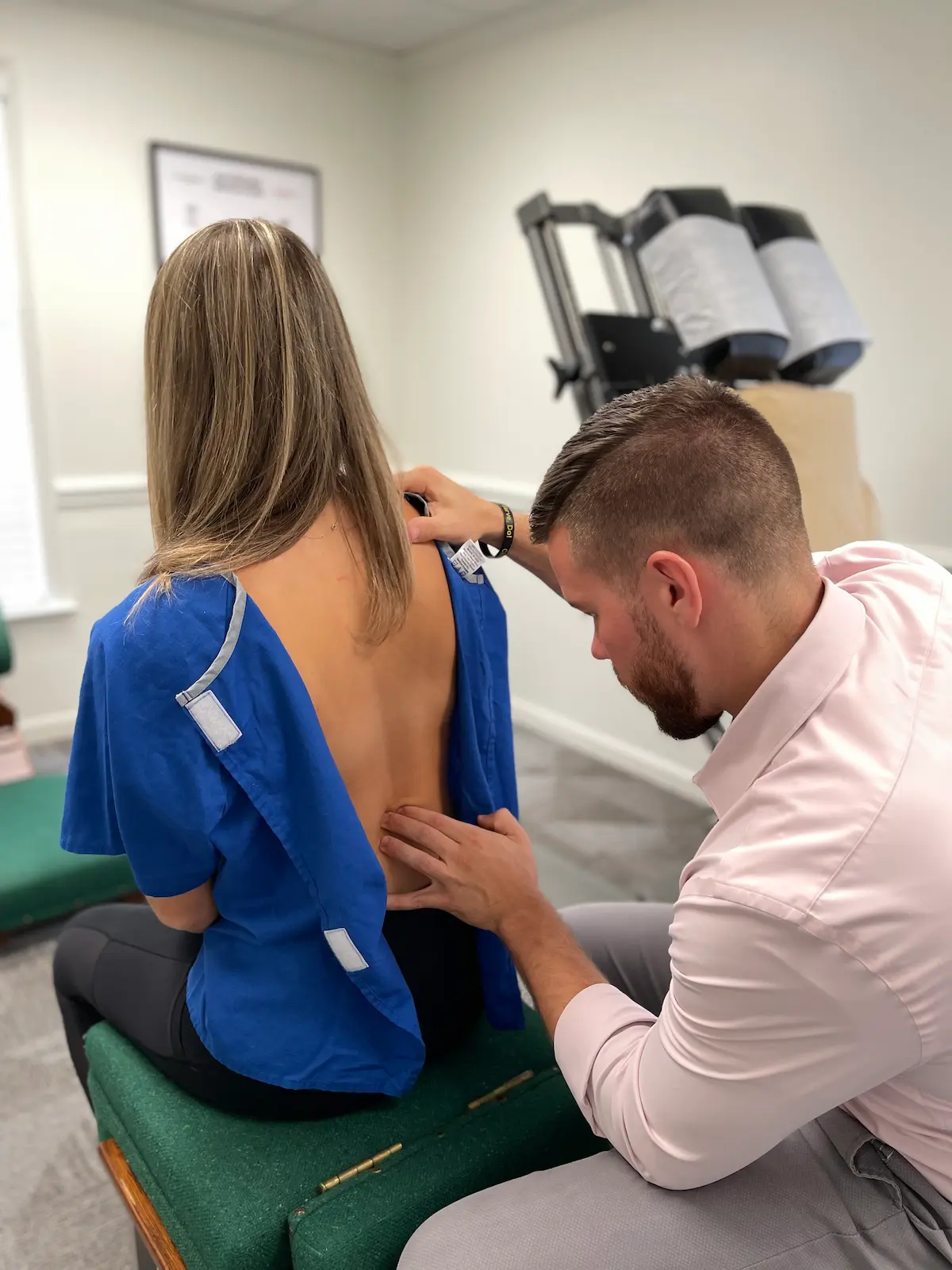
When a Charlotte patient comes in with TMJ symptoms, we assess the upper cervical spine and posture alongside the jaw, because these are so often connected.
Full-spine weight-bearing X-rays, with particular attention to the upper cervical region, show us the position of the top vertebrae and reveal forward head posture and loss of the normal neck curve, both of which affect jaw mechanics. Nervoscope instrumentation identifies nerve irritation in the upper cervical area. Palpation assesses the upper cervical segments and the muscle tension in the region connecting the neck and jaw.
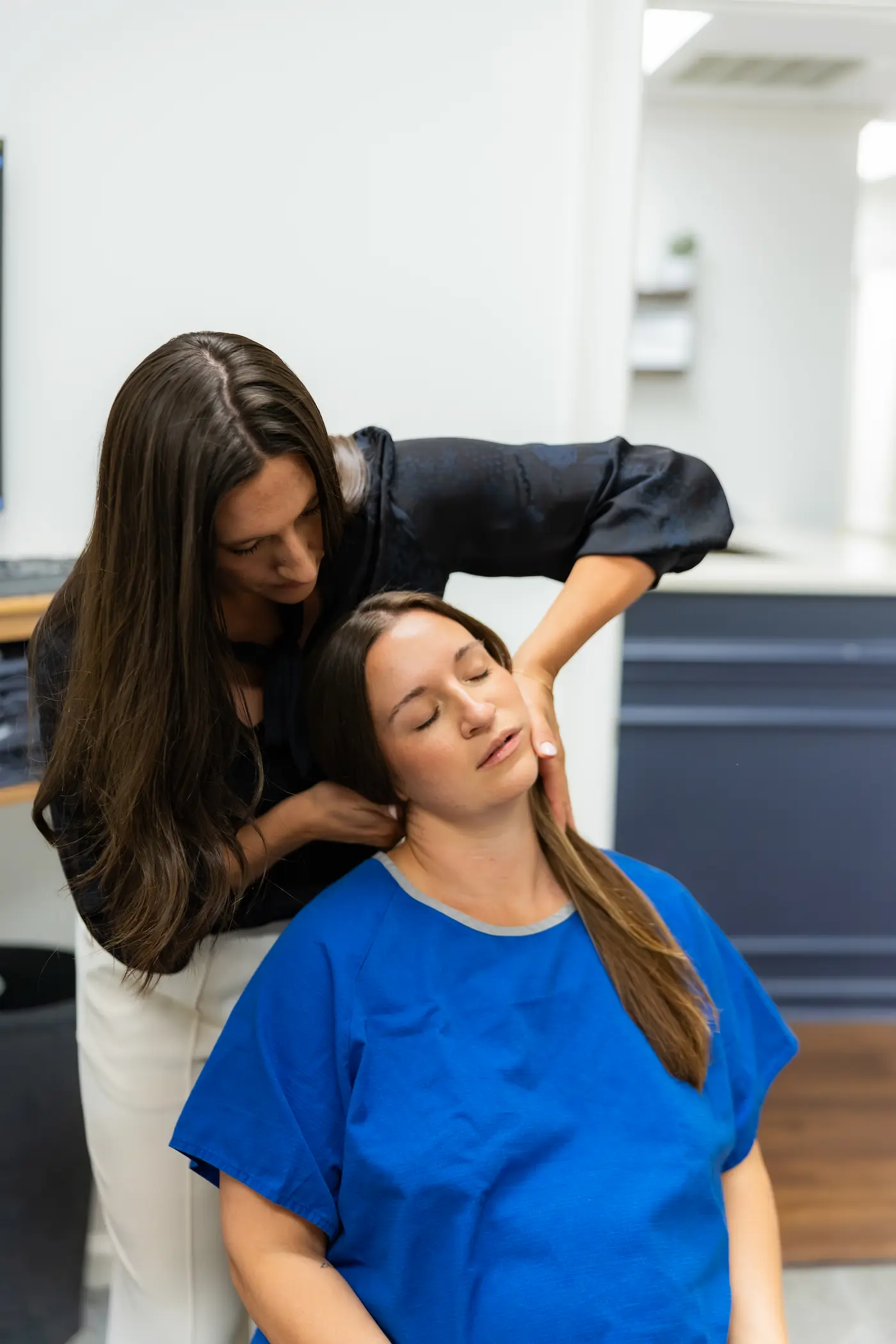
Specific Gonstead chiropractic adjustments to the upper cervical spine, delivered gently and without rotation, restore proper alignment to the top of the neck. This can improve the mechanical and neurological environment the jaw operates in, helping to relieve the muscle imbalance and joint stress contributing to TMJ dysfunction. Correcting forward head posture over the course of care further reduces the strain on the jaw.
Because the upper cervical spine is so central here, our work on conditions like neck pain is directly relevant, and the same upper cervical connection explains why jaw issues so often come with headaches, a link we explore in our content on how the neck contributes to head pain.
The Role of Stress and Clenching
Stress deserves a mention here, because it’s a major contributor to TMJ dysfunction. Many people clench or grind their teeth in response to stress, often during sleep without realizing it. This sustained clenching overworks the jaw muscles and stresses the temporomandibular joint.
Interestingly, stress and the upper cervical spine are also connected through the nervous system. Chronic stress keeps the nervous system in an activated state that increases overall muscle tension, including in the jaw and neck. Addressing upper cervical alignment can support a calmer nervous system state, and combined with stress management and, where appropriate, a night guard to protect against grinding, this gives a more complete approach to TMJ than focusing on any single factor.
Frequently Asked Questions
Can a chiropractor really help with jaw pain?
Yes, when the jaw problem has an upper cervical or postural component, which is common. Chiropractic care doesn’t treat the jaw joint directly the way a dentist might, but by correcting upper cervical misalignment and improving head posture, it addresses factors that contribute to TMJ dysfunction. For many people, this is the missing piece that jaw-focused treatment alone didn’t address.
Do I still need my night guard if I get chiropractic care?
Possibly, yes. A night guard protects your teeth and jaw from the effects of grinding and clenching, which is valuable if you do those things. Chiropractic care addresses the upper cervical and postural contributors to TMJ dysfunction. The two aren’t mutually exclusive, and using both often makes sense. We’d never advise abandoning a night guard your dentist recommended.
Why does my TMJ come with headaches and neck tension?
Because the jaw, upper neck, and the nerves serving the head are all closely interconnected. The sensory input from the jaw and the upper cervical spine converge in the same region of the brainstem, so dysfunction in one area commonly produces symptoms in the others. This is exactly why addressing the upper cervical spine can help with the whole cluster of jaw pain, headaches, and neck tension together.
If jaw pain, clicking, or TMJ dysfunction has been bothering you and jaw-focused treatment hasn’t fully resolved it, your upper neck may be part of the picture. Call (704) 469-4772 or schedule a consultation at Axiom Chiropractic in Charlotte and let’s look at the jaw-neck connection.
Axiom Chiropractic serves Charlotte, NC and surrounding communities with expert Gonstead chiropractic care, advanced red light therapy, functional medicine, and specialized animal chiropractic. Led by Dr. Tyler Hartley and Dr. Megan Hullihen, we help families overcome back pain, neck pain, headaches, sciatica, and digestive issues through precise spinal corrections. Call (704) 469-4772 or schedule online to start your wellness journey today.